What a Good Online Fitness Coach Does for Men Over 50
You already know you should lift. You know protein matters. You've probably downloaded a fitness app or two.
So why do you need an online fitness coach?
Fair question, and here's the straight answer, including who shouldn't bother with online training.
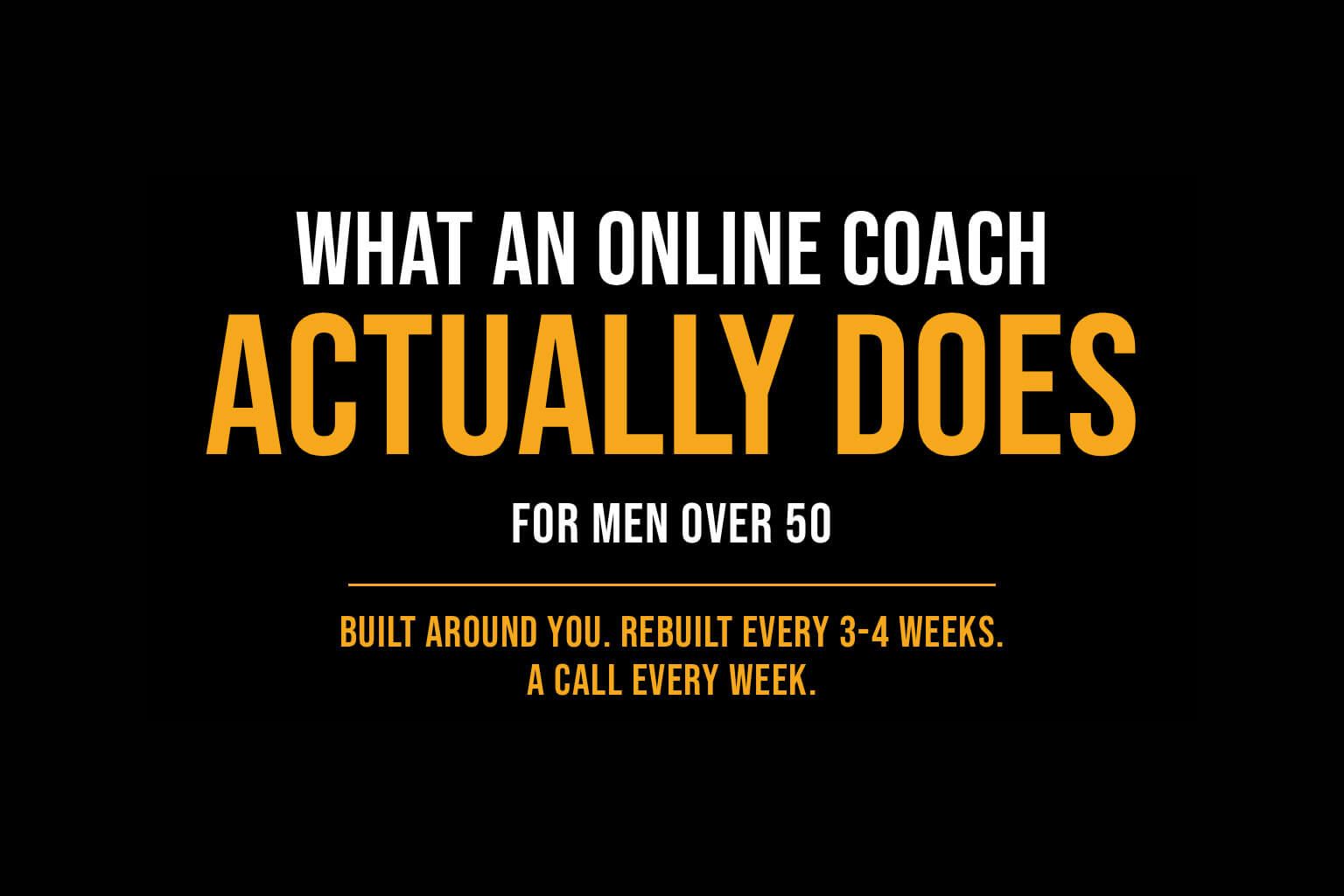
A good online fitness coach for men over 50 builds your program around your history, rebuilds it every 3-4 weeks, sets your calories based on real data, and talks with you every week. The real job is turning what you already know into lifelong habits.
The problem isn't information
You can find ten online fitness programs in five minutes.
Ten programs. Three opinions on protein. A podcast telling you to fast and another telling you not to.
But no way to know which one applies to you and your needs at 57.
Information isn't what's missing.
What's missing is someone who knows your situation and decides for you.
What I do
I build the program around you, not a template.
Before anything, I want your history. Surgeries. The shoulder that clicks. The back that went out in 2019.
What equipment you have. How many days you can train.
Then the program gets built for you.
When something hurts, we swap the movement, not the whole plan. If something bothers your shoulder, we change one exercise, and you keep training.
No grinding through it for twelve weeks.
No quitting.
Same goes for a bad week. When a week falls apart, I don't read that as a lack of discipline. It usually means the plan had a weak spot.
Your real week has work trips, late meetings, and nights you don't sleep.
The plan has to survive that week, not the perfect one. That's a design problem, and design is my job.
I rebuild it every 3-4 weeks.
Most programs are static. You run them until you're bored or hurt.
I rebuild yours every 3-4 weeks based on your numbers. What went up, what stalled, what you skipped, and why.
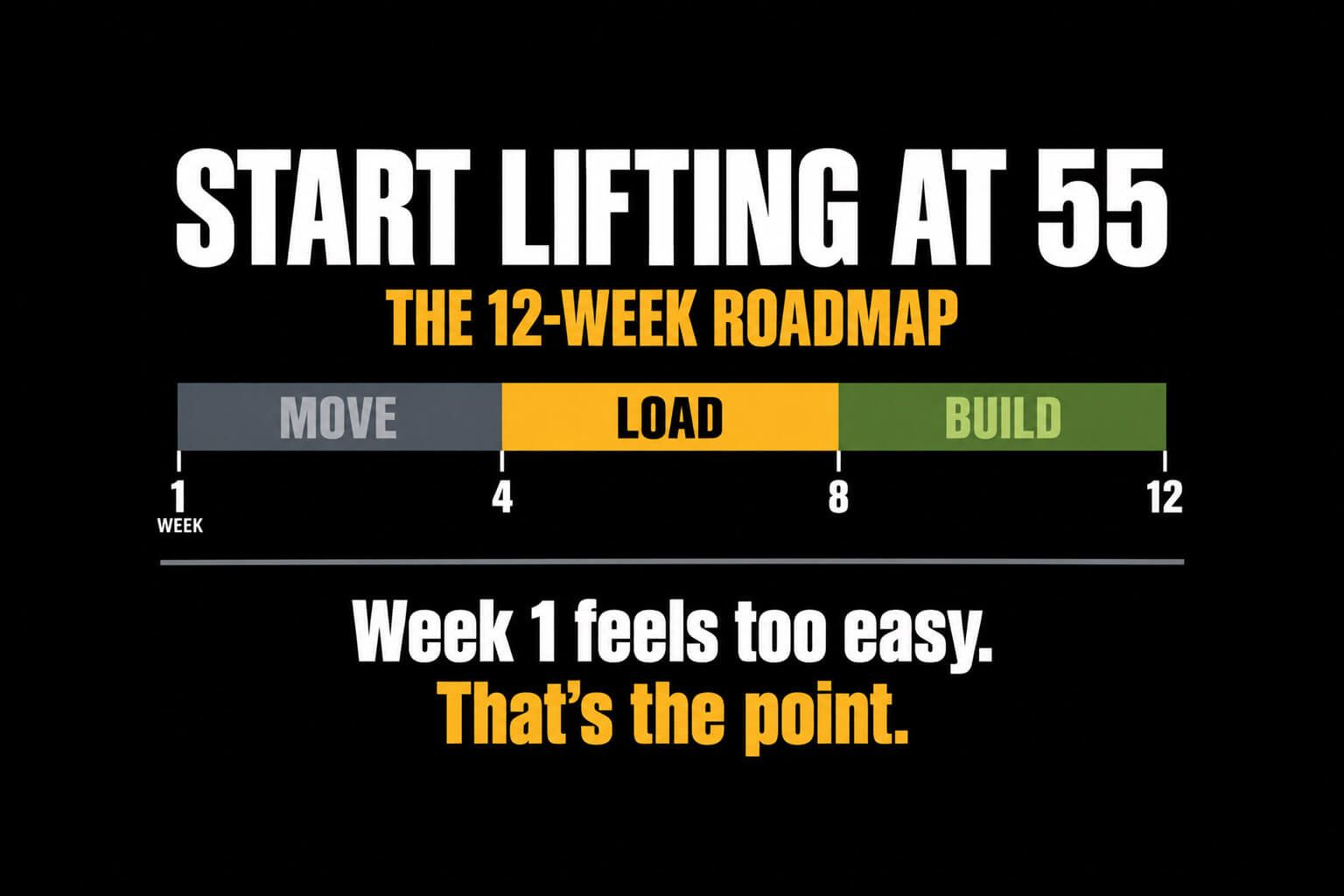
The plan works. That's exactly why it changes. Your body adapts to what you give it, so every 3-4 weeks we move you to the next step before progress slows down.
Each phase builds on the last one.
I set your calories based on your data, then adjust.
Not a calculator. Not a generic 1,600 or 1,800 calories a day.
NOPE!
We start with what you eat and how active you really are. Then we watch what the scale does over weeks, not days, and adjust from there. I wrote about how that works here.
When a client drops too fast, I often raise his calories.
That one sure surprises people.
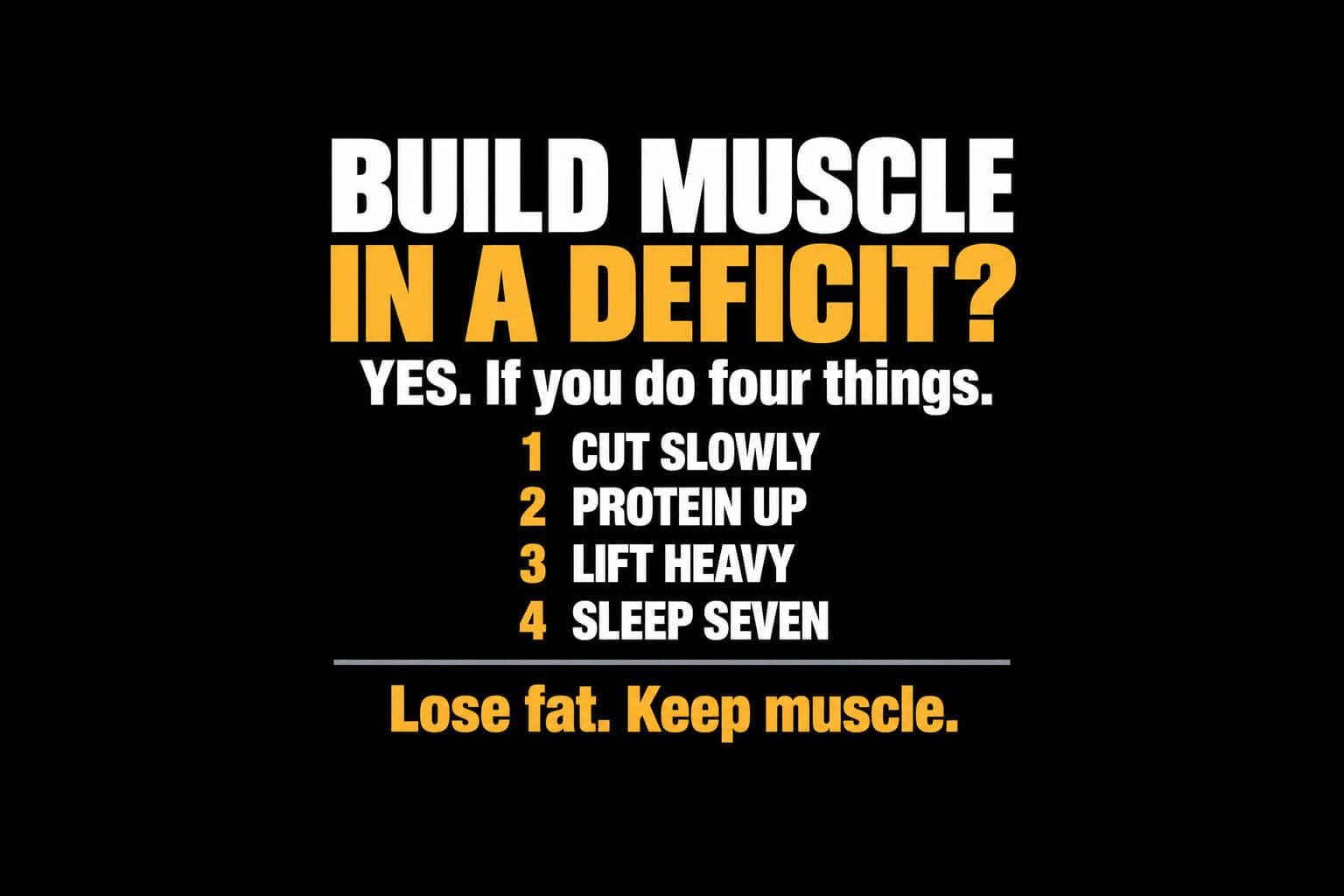
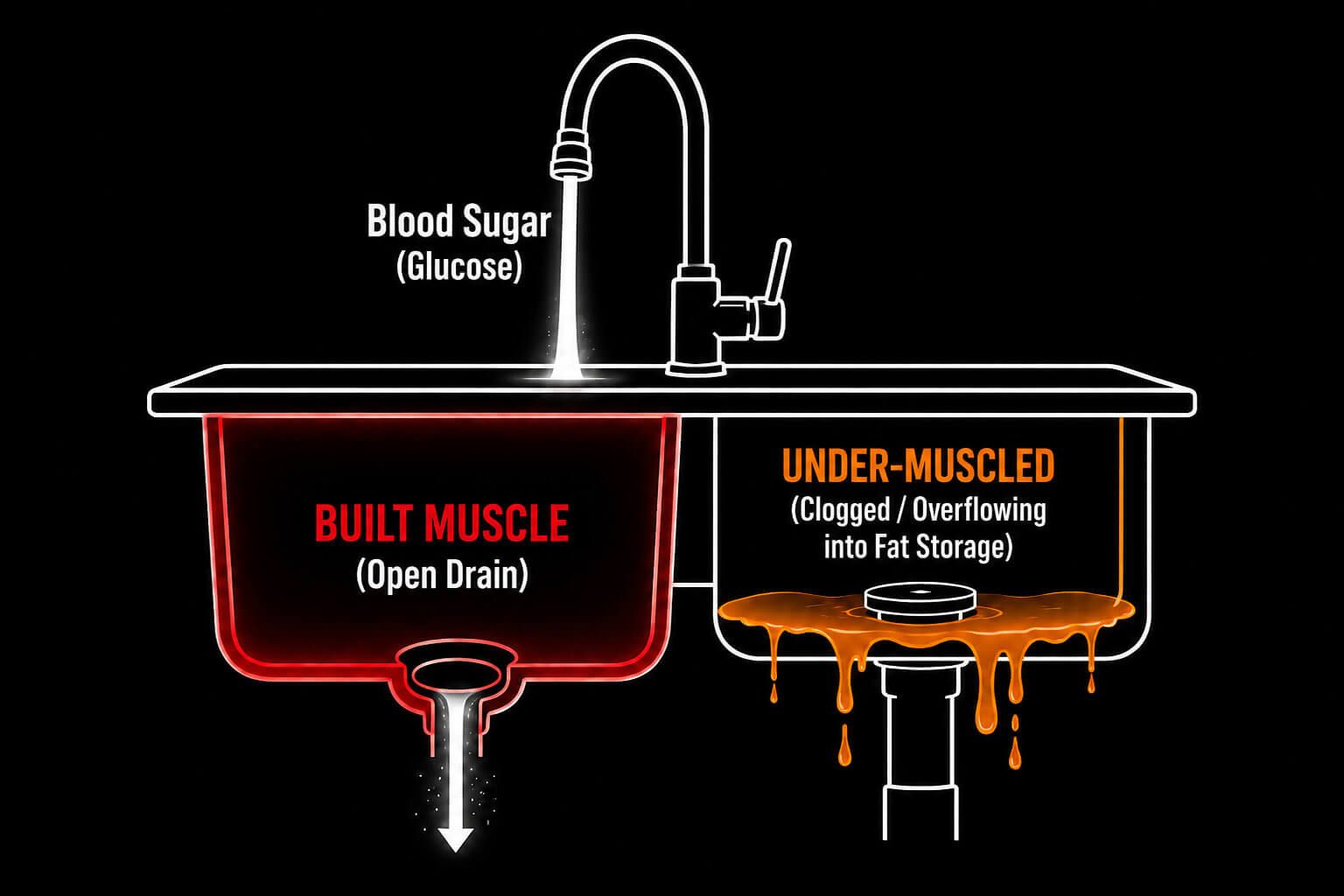
Lose weight too fast and a big share of it comes from muscle, not fat. A little more food gives your body what it needs to keep building muscle while the fat comes off.
Here's why that matters so much after 50.
I answer when you ask.
Not a chatbot. Not a forum. You text me a question about a hotel gym, and I answer it.
We talk every week.
Twenty to thirty minutes. This is the part that matters most. It's also the part most online coaching skips, because it doesn't scale.
A weekly call is where I hear that work is hard this month.
That you're not sleeping.
That you've been skipping breakfast again.
None of that shows up in a training log, and all of it changes how we adjust the program.
Every call follows the same pattern:
We look at what actually happened, not what you remember happening.
We find the exact spot where the week broke.
Then we pick one change for the next seven days. Not three. One, small enough to do on a bad week.
What I'm really building
Here's my real job, and it isn't writing workouts.
It's changing behavior.
People almost always know what to do.
What they need is help turning it into habits that stick.
That's my main job… Helping you build a habit that lasts the rest of your life.
Ninety days of me telling you what to do is worth very little if it all falls apart in month four.
So… from day one I'm working myself out of a job.
Fewer decisions. Repeatable defaults. A structure so plain you stop thinking about it.
The goal isn't a number on the scale. It's that a year from now you're still training, and nobody's reminding you to do it.
Who this isn't for
If you've been training consistently for years, you have a program that works, and you just want someone to check your form, you don't need me.
If you want someone to tell you what you want to hear, I'm the wrong guy. You'd be paying me to agree with you, and that won't change a thing.
And if you're looking for the cheapest option, I'm not it. There are $30 apps. They work fine for people who don't need a coach.
Who it is for
Men over 50 who know what to do and haven't been able to make it stick.
Who've started three times.
Who are busy enough that the plan has to survive a bad week, a work trip, or a hotel gym with nothing heavier than 50-pound dumbbells.
Who want someone paying attention.
What it costs
The 90-Day Rebuild is $997. Or three payments of $365.
That's roughly $330 a month for a program built and rebuilt around your numbers, a weekly call, and me on the other end of the phone.
For context, in-person training in most cities runs $80 to $120 a session. Two sessions a week for three months is $2,000 to $3,000, and you still go home and eat however you were going to eat.
What happens on our first call
Twenty minutes.
I want to know your goals, your health history, what you've tried, and why you want this now. I'll tell you straight whether I think I can help.
Where to start
Before we talk, take the Strength Score. Two minutes. It maps your protein, sleep, stress, and training against what your body needs after 50, and tells you what costing you the most right now.
Then we can have a real conversation instead of a vague one.
Before the plan comes the score.
Talk soon!
Craig