Can You Build Muscle After 50? I Did It at 55. Here's Exactly How.

At 55, I was not supposed to be building muscle.
Nobody told me that directly. But the fitness industry made it pretty clear. The magazine covers were for 25-year-olds. The workout programs assumed you were starting from peak condition.
And every conversation about fitness after 50 seemed to be about "staying active" and "maintaining" rather than actually getting stronger.
So I ignored the fitness industry and figured it out myself.
Five years later, at 59, I got certified as a personal trainer. Not because I wanted a new hobby. Because what I figured out worked so well that I needed to share it.
At 62, I'm stronger and leaner than I was at 35.
So, the big question... Can you build muscle after 50?
YES! But not the way most people think.
A Big Fat Myth That's Keeping Men Over 50 Weak
Here's the belief most men carry into their 50s...
Building muscle is for younger guys.
After 50, you're just trying to hold onto what you have.
That belief is wrong. And it's costing men their health, their energy, and their independence.
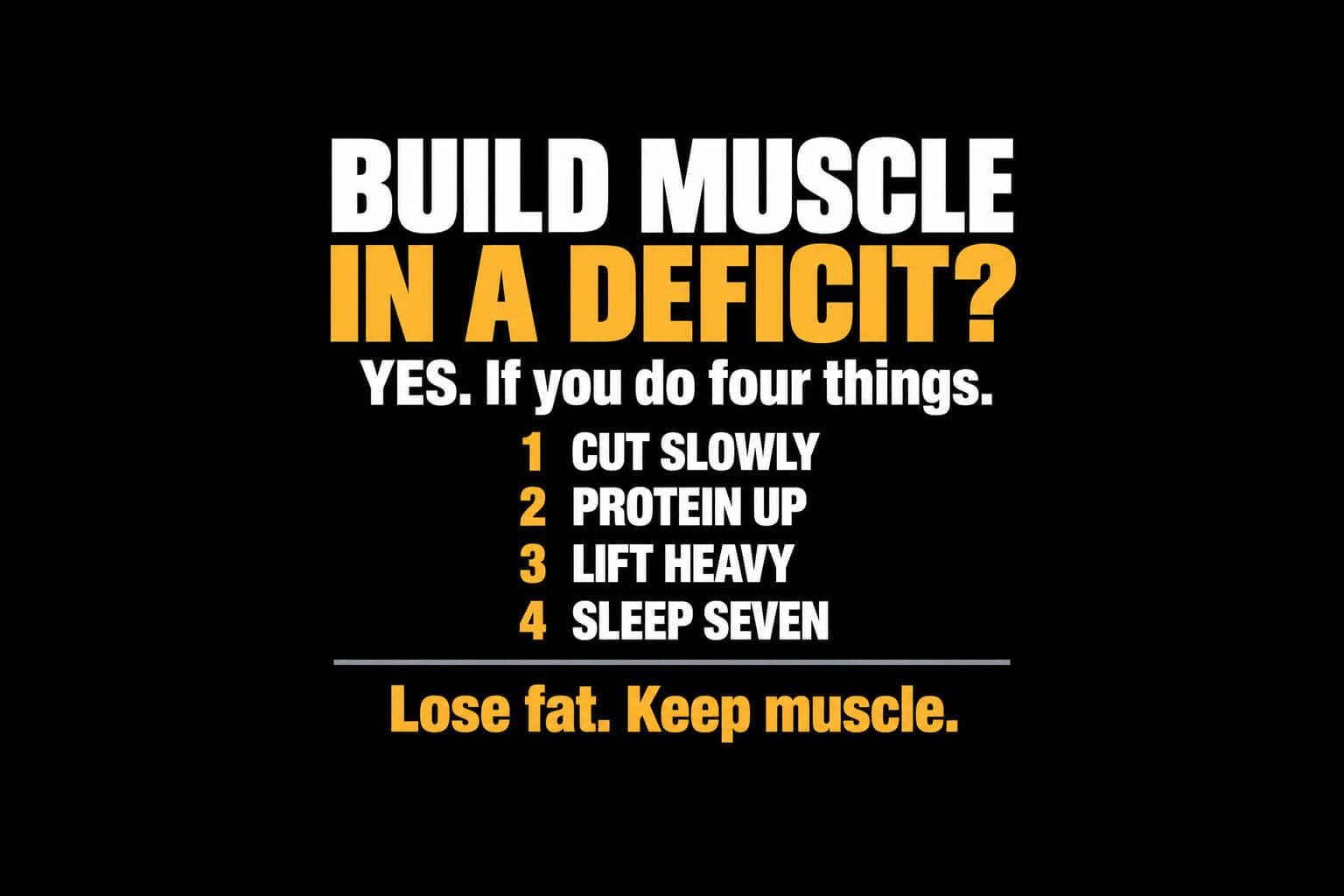
The research is clear. A study cited in StrengthLog found that male participants with a mean age of 60 gained 2 kilograms of fat-free muscle mass while simultaneously losing 2 kilograms of fat during just 16 weeks of training.
That's not maintenance. That's transformation.
The biology works. The question is whether you're using the right approach.
Most men aren't.
Why Most Men Over 50 Fail at Building Muscle
I'm a coach, and here's what I see over and over again from men who tell me they've "tried everything" and can't seem to build muscle after 50.
They're doing too much cardio and not enough strength training.
They're eating too little protein.
And they're following programs designed for 25-year-olds, which don't account for how your body actually works after 50.
It's not an age problem. It's a strategy problem.
Let me explain what's actually happening in your body, and then I'll tell you what to do about it.
What Changes After 50, And Why It Matters if You Want to Build Muscle
Building muscle after 50 isn't the same as building muscle at 30.
The biology shifts in three important ways, and understanding these shifts is the difference between spinning your wheels and actually making progress.
Sarcopenia is real and it starts earlier than you think.
Starting in your 30s, men lose roughly 3 to 5% of muscle mass per decade. After 50, that rate accelerates.
This age-related muscle loss is called sarcopenia, and it's happening whether you're active or not. The good news: strength training is the most effective intervention known to science for reversing it.
You can't outrun sarcopenia, but you can out-lift it.
Anabolic resistance changes how your muscles respond to training.
After 50, your muscles develop what researchers call anabolic resistance, meaning they become less efficient at responding to the signals that trigger muscle growth.
Dr. Stuart Phillips' research at McMaster University has shown that this doesn't mean muscle building stops, it means the stimulus needs to be consistent, the effort needs to be real, and the protein intake needs to be higher than most men are currently eating.
Recovery takes longer, and that's not a weakness.
At 25, your body bounces back from training in 24 hours. At 55, it might take 48 to 72 hours. That's not a problem to overcome. It's a signal to train smarter. Three focused sessions per week with adequate recovery between them consistently outperforms five or six sessions that leave you perpetually depleted.
Understanding these three shifts doesn't mean accepting decline. It means building a program around your actual biology instead of the one you had at 30.
Can You Still Build Muscle at 50, 55, or 60? The Research Says Yes.
This is the question I get most often. And the answer is VERY CLEAR!
Yes! You can build muscle while also losing fat after 50. After 55. After 60. The research supports it, my own transformation proves it, and the clients I coach confirm it every week.
BUT... how you build muscle after 50 is different from how you built it at 30.
The principles are the same. Progressive overload, adequate protein, consistent training, sufficient recovery. But your routine needs to be designed for you! Meaning your body at your age.
That's exactly what most generic fitness programs miss.
How to Build Muscle After 50: The Three Non-Negotiables
I spent years figuring this out through trial and error, and a lot of cardio that wasn't working. Here's what actually matters for building muscle after 50 for men.
1. Strength Training Built Around Progressive Overload
Progressive what?... Progressive overload is the single most important principle in muscle building after 50. It means you gradually and consistently increase the challenge to your muscles over time.
Think... More reps. More weight. More intensity.
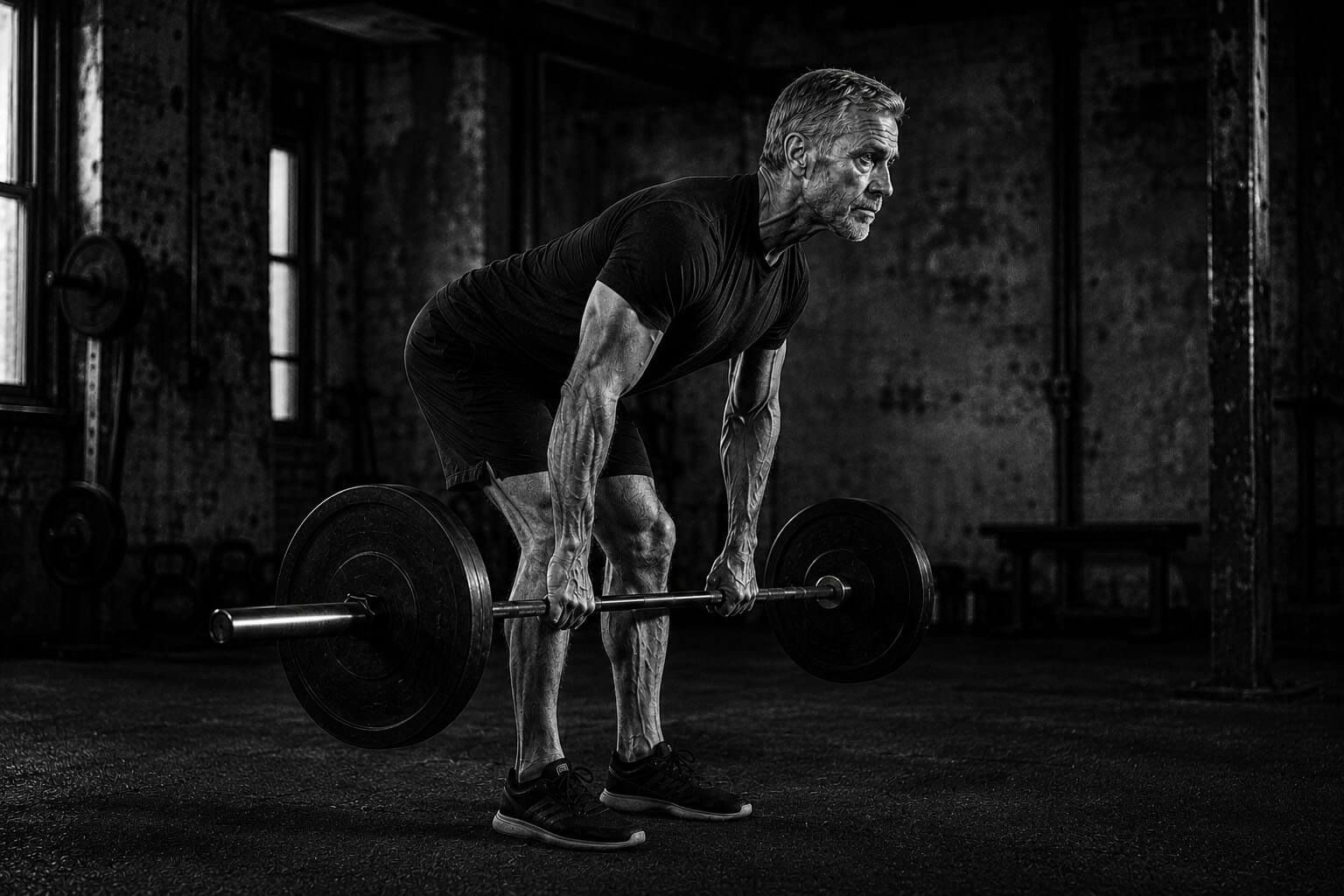
Three focused sessions per week. Forty minutes. Built around compound movements that work multiple muscle groups simultaneously, squats, deadlifts, rows, presses, and hinges. These are the movements that build the most muscle in the least time and translate directly to real-world strength.
We all love bicep curls, but trust me, it's best to start with the combound stuff!
As I wrote in my playbook for building muscle after 50, you don't need to lift the heaviest weight in the gym.
You need to lift with enough effort to actually challenge your muscles, and then progressively increase that challenge over time.
That's the whole game.
2. Protein Intake That Matches Your Age
This is where most men over 50 are leaving serious gains on the table.
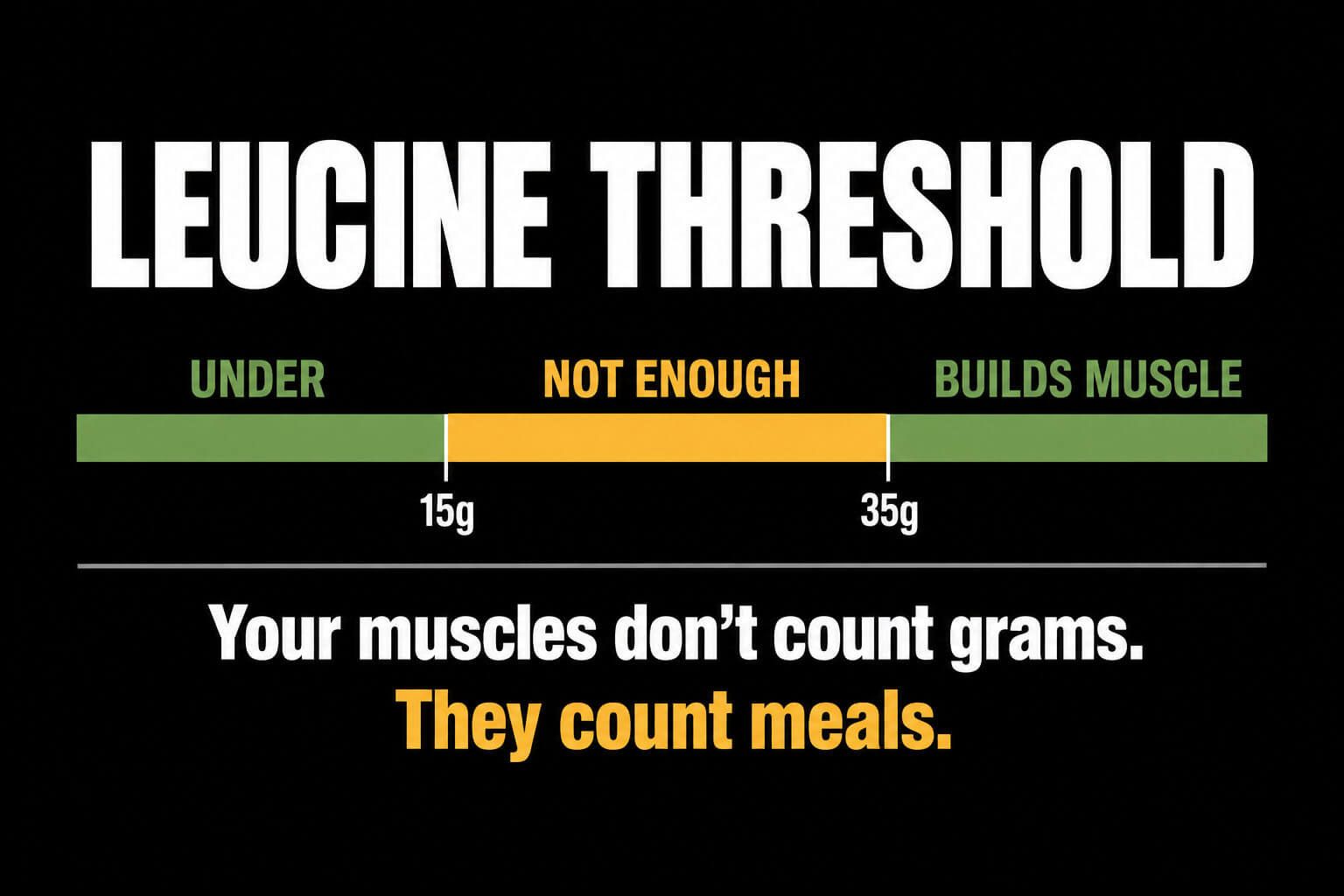
Your muscles need protein to rebuild after training. That's true at any age. But after 50, because of anabolic resistance, you need significantly more protein than you did at 30 just to get the same muscle-building response.
The target: 0.7 to 1 gram of protein per pound of bodyweight per day. For a 180-pound man, that's 126 to 180 grams daily. Spread across three or four meals. Built around real food first, chicken, eggs, Greek yogurt, cottage cheese, canned fish, and beans.
As I covered in The Protein Problem: You're Probably Eating Half the Protein You Need, most men over 50 are hitting roughly half that target.
Not because they're not trying, but because the guidelines they've been following were set as minimums to prevent deficiency, not to optimize muscle building after 50.
Protein and building muscle after 50 are inseparable. You cannot out-train a protein deficit.
3. Recovery Treated as Seriously as Training
This is the one most men skip. And it's the one that determines whether the first two actually work.
Sleep is when your muscles rebuild. Your body releases growth hormone during deep sleep, and that's the environment where muscle protein synthesis does its most important work.
Seven to nine hours isn't optional. It's part of the program.
Walking keeps inflammation low, improves insulin sensitivity, and supports recovery without adding stress to your system. Ten thousand steps a day isn't just a fitness goal. It's recovery management.
And training frequency matters. Three sessions per week with real recovery between them will build more muscle than five sessions that leave you chronically depleted and injured. The goal is to stress the muscle enough to trigger adaptation, then get out of the way and let your body do the work.
Recovery isn't a break from building muscle. Recovery IS building muscle.
What Muscle Building After 50 Actually Looks Like
At 240 lbs in my late 30s, I thought I just needed more discipline.
In my 40s, I yo-yo'd. Lost weight, gained it back, lost it again.
By my late 40s I was running constantly, my back was killing me, and I was thin but weak and exhausted.
In my mid 50s, I finally changed the approach entirely.
Stopped running from the problem. Started lifting. Dialed in my protein. Took recovery seriously.
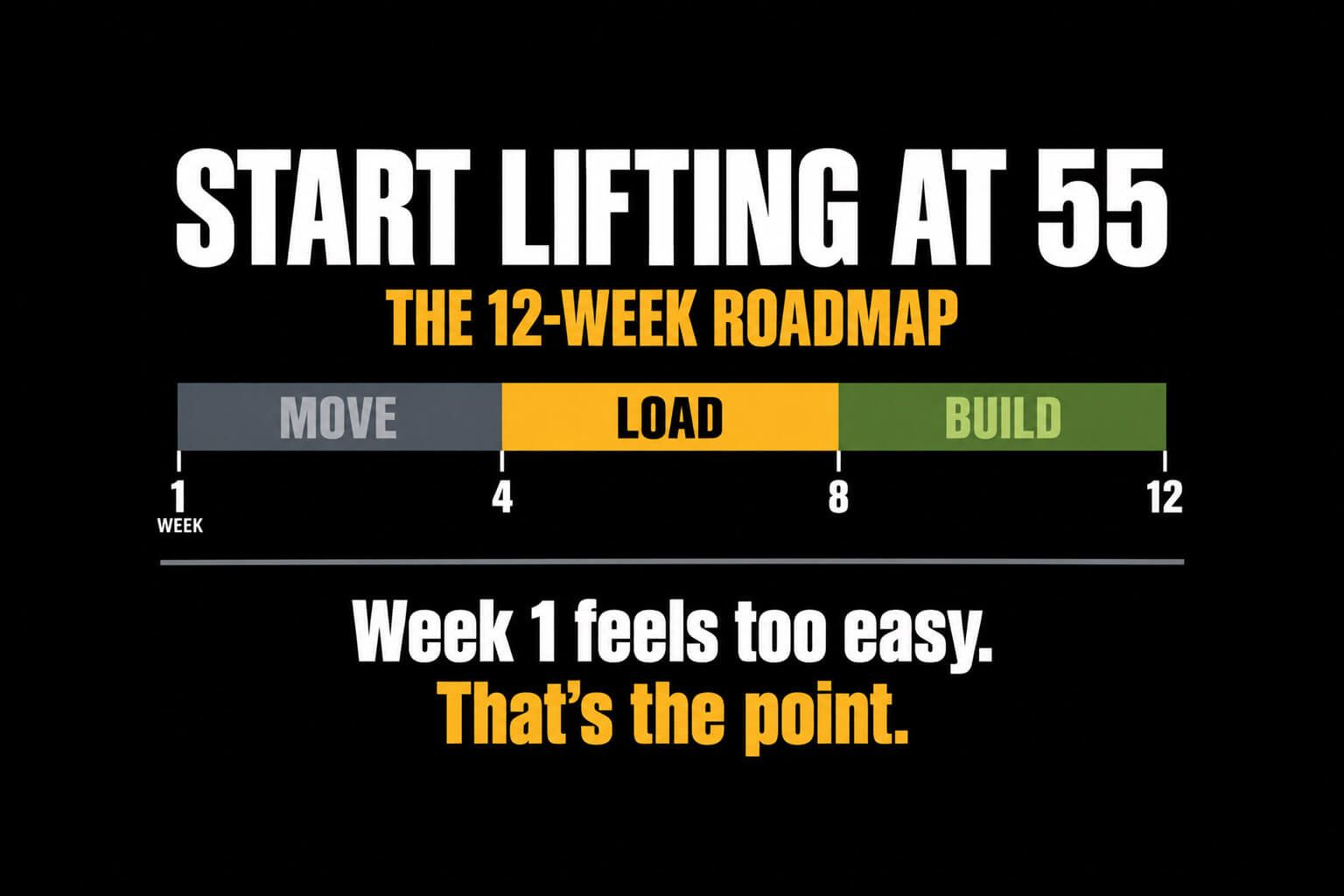
I started lifting weights at 55. The changes didn't happen overnight. They happened over months. Then years. Quietly and consistently.
At 62, I'm stronger than I was at 35. My back pain is gone. My energy is higher than it's been since my 30s. And I'm still making progress.
Strength training changed my life, and it can change yours!
The Biggest Mistake Men Over 50 Make When Trying to Build Muscle
They make it way, way too complicated.
They research the perfect program. They worry about the optimal rep range. They debate whether they need creatine or not. They try to find the exact right split, the ideal training frequency, the best exercises.
And then they don't start. Or they start and quit when the results don't come fast enough.
Here's what I know after years of doing this and coaching men through it:
A consistent, simple strength training program done three times a week will produce better results than the perfect program done inconsistently.
Show up. Lift. Add a little more challenge over time. Eat your protein. Sleep. Walk.
That's the strength training program for men over 50 that actually works. Not because it's sophisticated. Because it's sustainable.
The Bottom Line on Building Muscle After 50
Can you build muscle after 50?
Yes. Unambiguously, yes.
The biology supports it. The research confirms it. My own transformation and the men I coach every week prove it.
But you need the right system, built around how your body actually works after 50. Progressive overload. Protein-first nutrition. Recovery as part of the program.
That's how to gain muscle after 50 as a man. Not by training harder. By training smarter, more consistently, and with a clear understanding of what your body needs now rather than what it needed at 30.
If you want to understand what this looks like as an online strength coaching program built specifically for men over 50, that's exactly what I do.
And if you've been struggling with stubborn belly fat alongside the muscle loss, those two problems are connected, and solving one helps solve the other.
Ready to Find Out Where You Actually Stand?
Before you can build the right system, you need to know exactly where you are right now.
Take the free FiftyPlus Fitness Strength Assessment. Five minutes. Personalized result. A clear picture of what to focus on first.
Take the Free Strength Assessment Here
Or if you're ready to talk about what a real strength program looks like for your specific situation, book a free 20-minute Strategy Call. No pitch. No pressure. Just an honest conversation.
Craig McBreen is a NASM-Certified Personal Trainer and the founder of FiftyPlus Fitness in Fort Collins, Colorado. He started his strength training transformation at 55, got certified at 59, and is stronger at 62 than he was at 35.