Your A1c Isn't a Diabetes Number. It's an Aging Number
Your doctor says, "Your A1c is a little elevated. Keep an eye on it," and quickly moves on. Before you know it, the meeting is over, and you don’t know what to do about it.
HbA1c is short for Hemoglobin A1c. Or it might be called A1c.
It measures your average blood sugar (glucose) levels over the last 2-3 months.
In a nutshell, HbA1c measures the percentage of sugar-coated hemoglobin (a protein found inside your red blood cells).
Think of it this way. A standard finger-prick test is a snapshot. HbA1c is a 3-month movie.
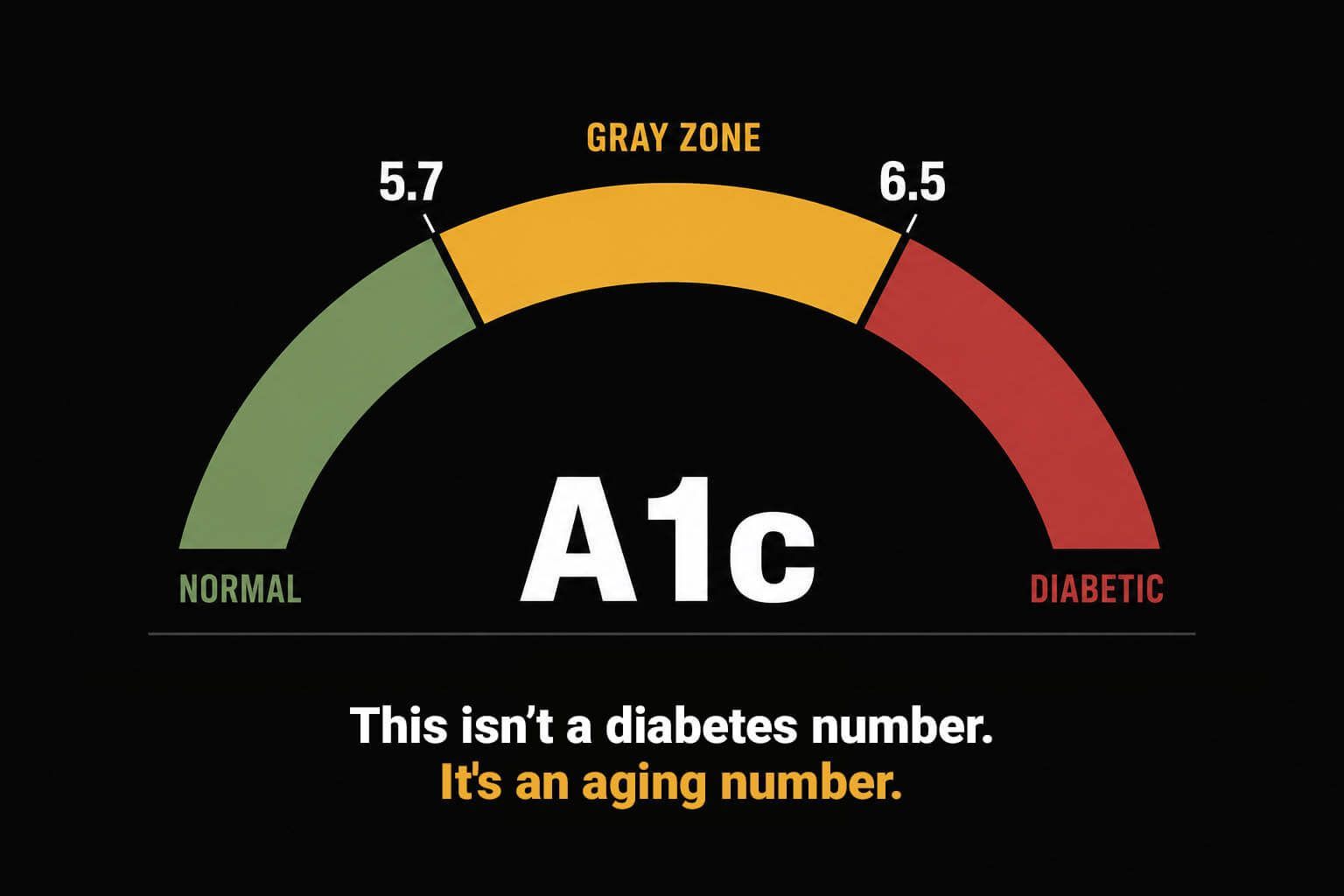
Below 5.7 is normal. 5.7 to 6.4 is the pre-diabetic gray zone. 6.5 and above is diabetic.
Most men over 50 are sitting in that gray zone but don’t know it.
You might be in the gray zone thinking, “I feel fine,” but that’s the trap. Chronically high blood sugar binds to your tissues and corrodes your organs from within. By the time you actually feel a symptom, years of it have already accumulated.
This isn't a diabetes number. It's an aging number.
Muscle Is Your Sugar Sink
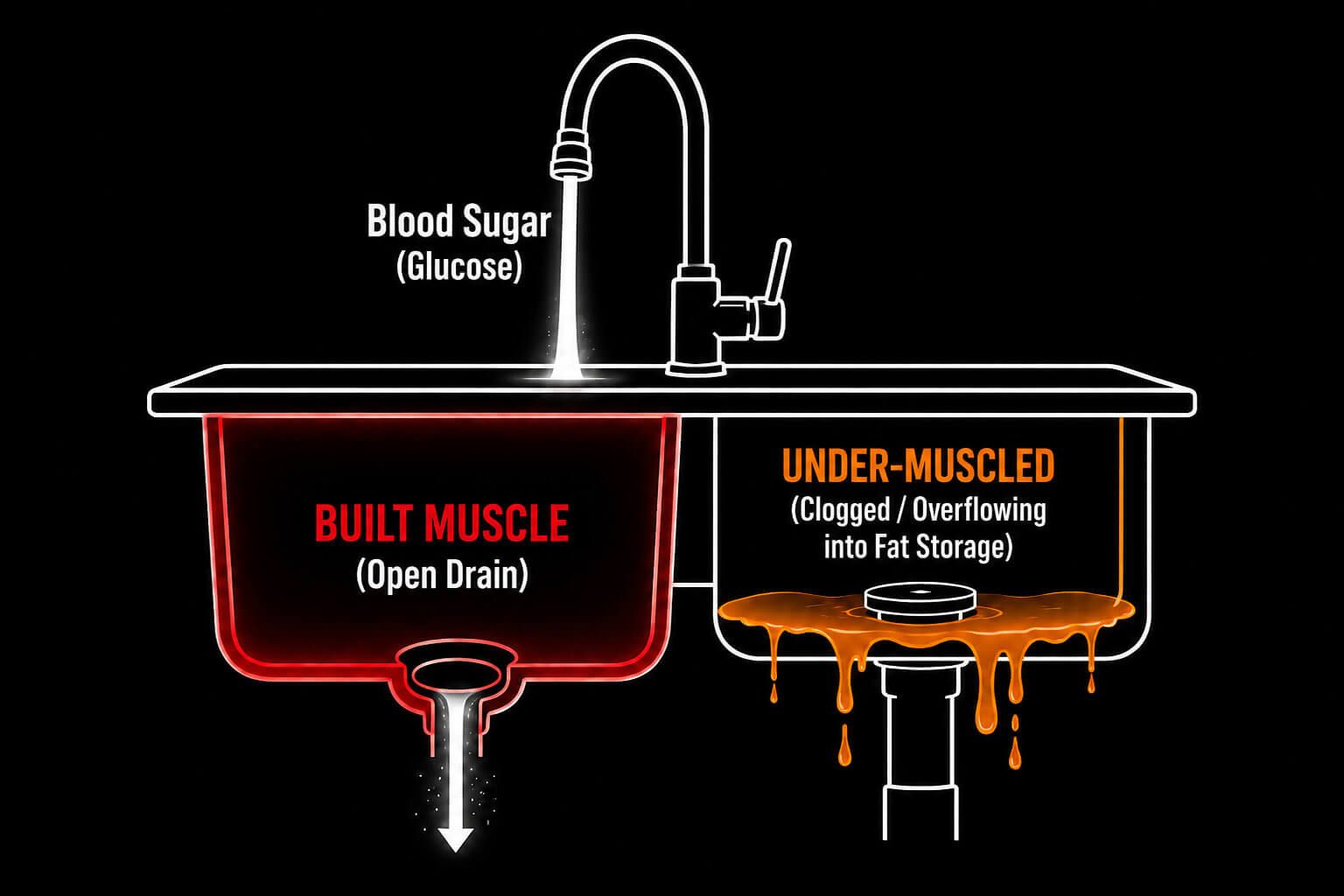
Your muscles use blood sugar and are the biggest sink in your body. And after 50, you lose muscle every year unless you lift. Less muscle means less capacity to clear sugar. The number climbs. It’s not age. It’s muscle loss.
The good news? Lifting weights builds your glucose sink. Your muscles open up like sponges and suck sugar out of your blood to use for fuel. One lifting session improves glucose uptake for a day or two. Consistent lifting changes the tissue itself.
But lifting needs a partner. Protein puts your body in muscle-building mode. It builds the muscle that clears the sugar. And since your body digests protein significantly slower than carbohydrates, it slows how fast carbs hit your bloodstream.
You’d never ignore a business metric trending the wrong way. The same logic applies to your body. You might be thinking, 5.9 isn’t 6.5. I’m not diabetic. I can deal with it later. But if you act now (at 5.9, not 7.2), you can reverse it instead of managing it for life.
How the Number Actually Works
In simple terms, sugar in your blood attaches to hemoglobin, the protein in your red blood cells. (I won’t get into the science, but when they bump into each other, they naturally lock together.)
Red blood cells live about 120 days before they wear out and are replaced.
More sugar in your blood means more hemoglobin gets coated. The A1c test counts what percentage are coated. That percentage is your number.
Which is why you can’t game it. Eating clean for three days before your blood draw won’t change the result.
Your Next Three Moves
If you’ve never seen your A1c, ask for it at your next physical. Or order it yourself.
That’s step one.
Step two is creating a lifting habit. Lift 3-4 times a week and make it a non-negotiable. It’s what saved me.
Back then, I thought getting in shape meant grinding through cardio sessions and suffering through restrictive diets.
At 36, I was 240 pounds with a bad back, convinced that if I just ran more and ate less, everything would click.
It didn't.
I lost some weight, but also lost energy. I was tired by mid-afternoon, still soft around the middle, and weaker than I'd ever been.
I went from fat to skinny-fat with crippling back pain and an obsession with long cardio sessions because I thought it was the secret to getting fit.
It wasn't.
Today at 62, I'm stronger than I was at 36.
I don't "work out" anymore.
I build strength.
Step three: Eat enough protein. 0.7 to 1 gram per pound of your target body weight.
It's the building block your body needs to maintain muscle. But most people don’t eat nearly enough.
I won't detail everything I eat, but the bottom line is this: protein-first meals.
You don't need a complex meal plan. Just prioritize protein (and whole foods) at every meal and watch how your body responds.
Before the plan comes the score.
Take my free Strength Score assessment and find out exactly where you stand right now. Takes 2 minutes. Completely free.