Can You Build Muscle in a Calorie Deficit?
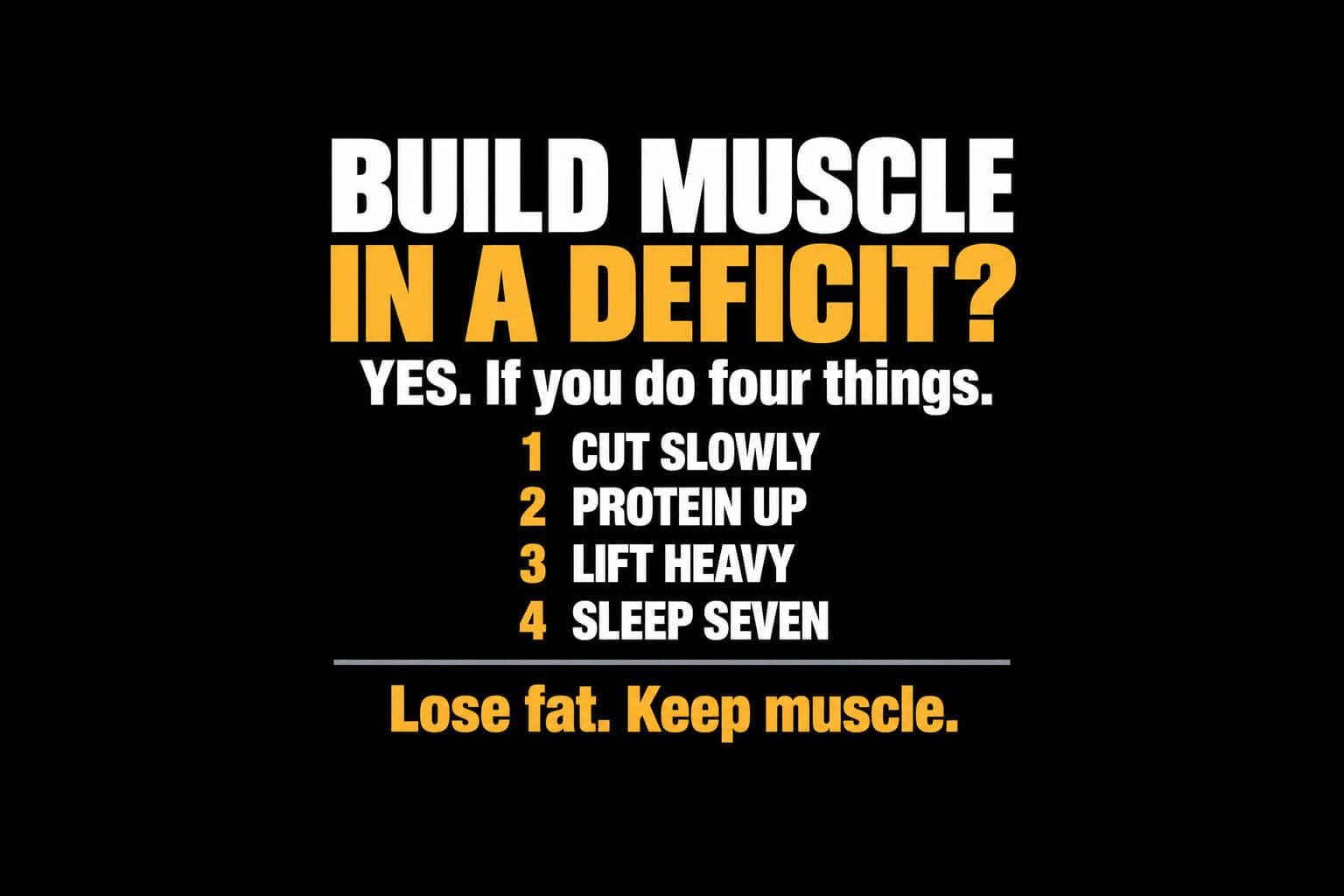
Yes. BUT… it depends on who you are.
You might be new to lifting, starting after years off, or carrying some extra fat. If so, you can build muscle and lose fat at the same time.
But if you’re lean and have been training. Well, let’s just say it’ll be a wee bit more difficult.
Regardless, your goal should be to keep every pound of muscle while losing fat.
That’s me being honest, but here’s what decides it…
Why most men over 50 lose muscle when they diet
You cut calories, the scale drops, and you feel like all is good.
Then you look in the mirror months later, and you’re a smaller version of the same soft body. Lighter, not leaner.
So, what the heck happened? Your body needed energy, and it took it from where it could. Some from fat. Some from muscle. And after 50, muscle is something you can't afford to lose.
I lived this. At 36, I was 240 lbs. In my 40s, I got “fit” by running.
I was addicted to endless cardio, ate whatever, and lost the same 20-30 lbs several times.
I also felt like crap, lacked energy, and was, frankly, a little soft.
I wasn’t lazy. I was burning away the one thing that would have fixed me.
Muscle.
The four things that decide it
1- Don’t cut too hard:
This is where most men go wrong. A 1,200-calorie crash diet doesn’t build anything and isn’t sustainable. It strips muscle and wrecks your training. Been there, done that!
Aim for a moderate deficit. Roughly 300 calories below what you burn. That’s about half a pound per week.
Sounds slow because it is, and that’s the point. Lose faster than about 1 percent of your body weight a week, and you might start losing muscle too.
I watch this number with clients who drop too fast. I raise their calories. This sounds counterintuitive and really surprises people, but it shouldn’t.
2- Protein goes up, not down
When calories come down, protein goes up. And it’s the one thing that doesn’t get cut.
Target 0.8 to 1 grams of protein per pound of bodyweight. At 190 lbs, that’s 150-190 grams. In a deficit, lean toward the top of that range.
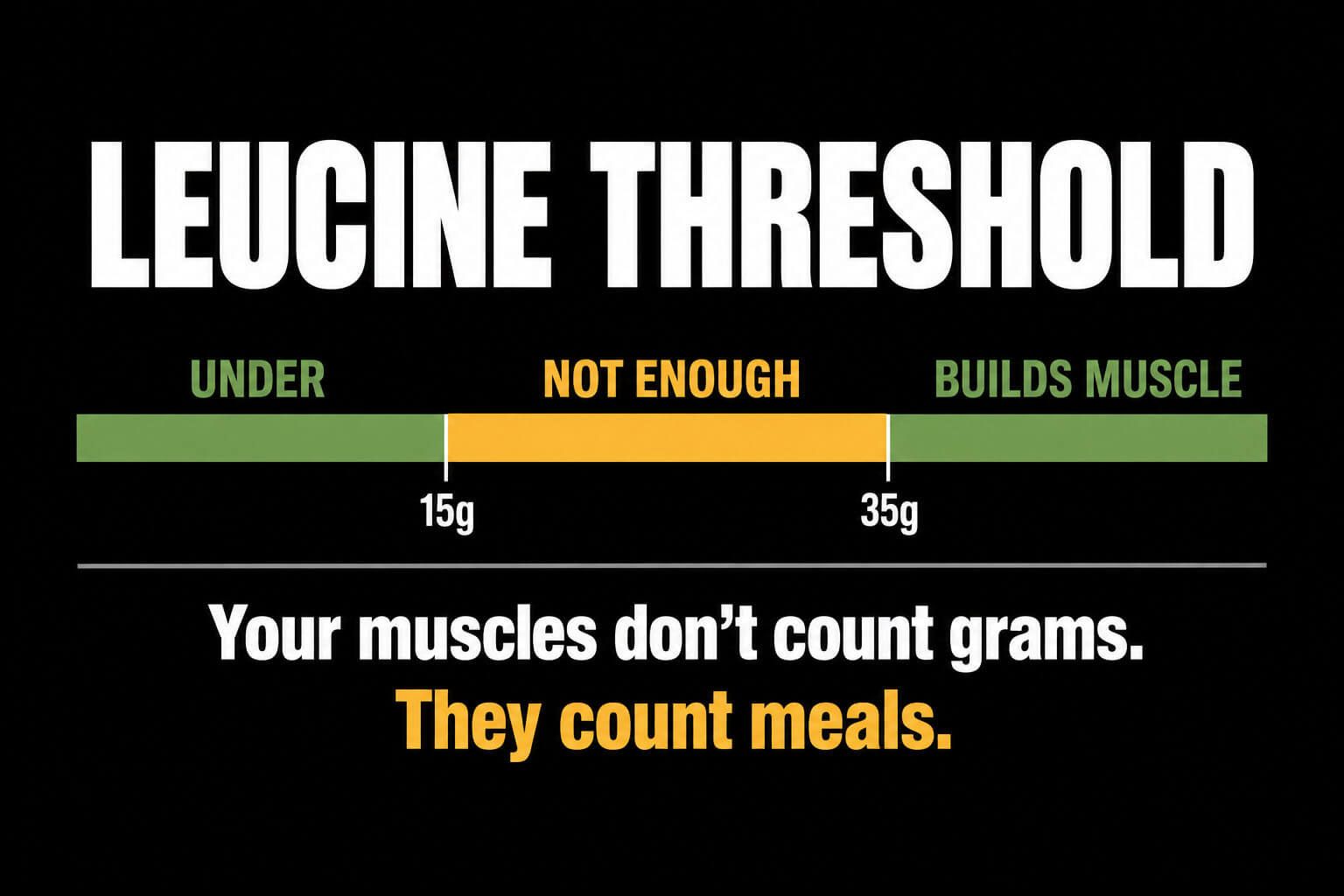
And the daily total isn’t the whole story. Your muscles only build when a single meal is big enough to trigger it, which after 50, means roughly 35-40 grams each meal. You can hit 150 grams a day in snacks and small plates and trigger almost nothing. I wrote about why here: You Hit Your Protein Target and Still Aren’t Gaining Muscle.
Three to four meals a day. And no grazing.
3- Lift and get stronger
Protein is the raw material.
Lifting is the signal that tells your body to spend it on muscle instead of burning it.
Without the lifting signal, a high-protein diet is just expensive food.
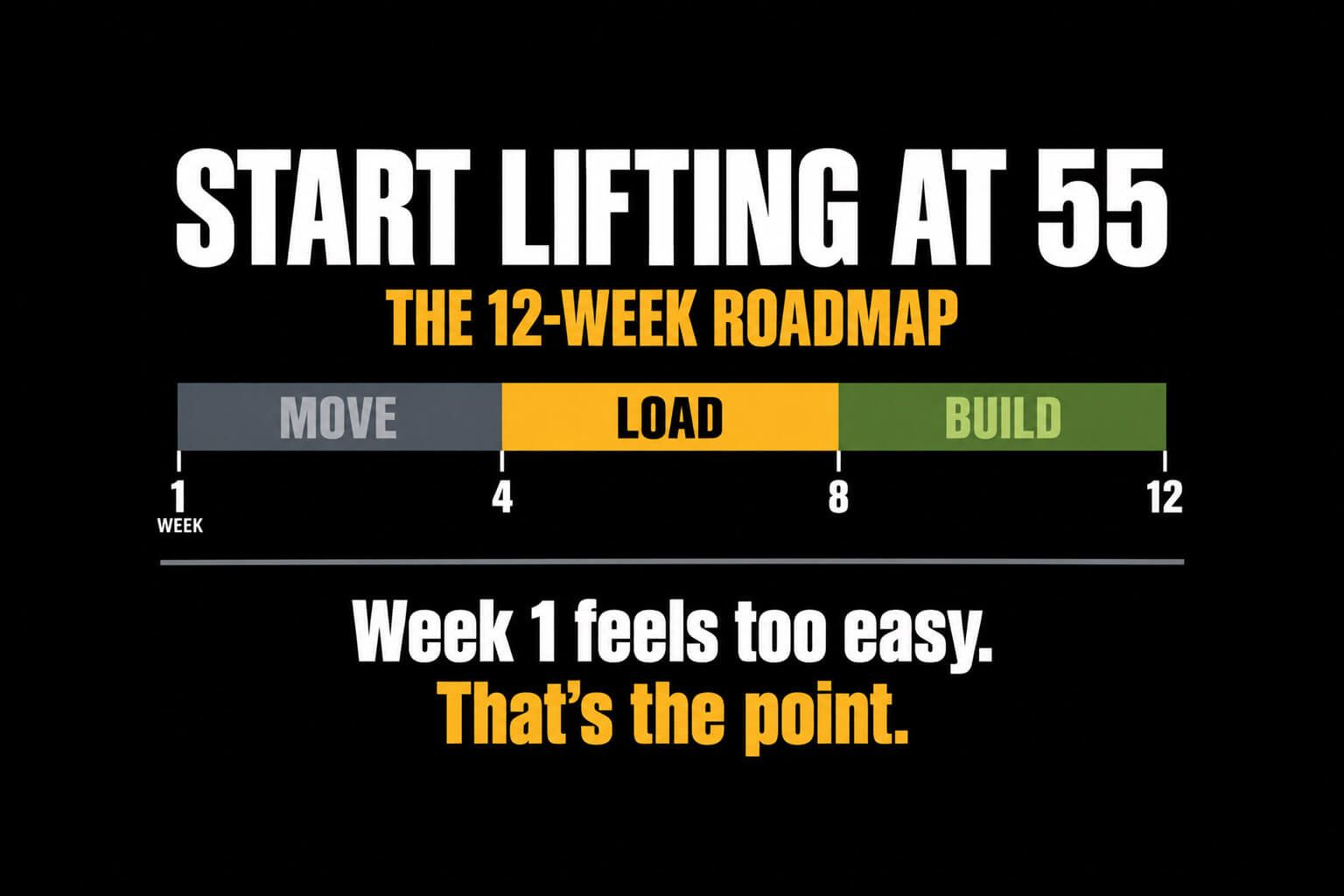
Start with three sessions a week. Forty minutes. Progressive overload, which means the weight or intensity goes up over time. In a deficit, you may not add much. That’s fine. Holding your numbers while the scale drops means you’re keeping muscle, and that’s a win.
Don’t chase soreness.
Don’t add extra cardio because you want faster results.
Yes, cardio burns calories, but it doesn’t send the “build” signal. And it interferes with recovery.
4- Sleep, or none of it works
Repair happens while you sleep. Cut sleep short and you lose more muscle and less fat.
6.5 to 7+ hours of sleep.
Who gets the best results?
Four groups do well at building muscle and losing fat at once:
Men new to lifting. Your body responds to a stimulus it’s never seen.
Men coming back after years off. You’re rebuilding muscle you had, and that happens faster than building new muscle.
Men carrying extra body fat. You have plenty of stored energy to fuel the work.
Men who have been under-eating protein. Fixing that alone changes things.
Most men over 50 who come to me are in at least two of these groups. That's why the first few months often look better than the research would predict.
What does progress look like?
The scale is the worst tool for this.
If you’re building muscle and losing fat at the same time, your weight might barely move for a month. The scale says nothing is happening. Your clothes say otherwise.
So track more than one thing:
Weekly average bodyweight- Waist measurement, once a week
- Photos every 2-3 weeks
- Your training log, every session
A single number is noise. Your pattern over time is the information you want to pay attention to.
Then what?
You don’t stay in a deficit forever. When you hit your target, calories come back up slowly. Call it 100 a week until you’re back at maintenance. Protein stays. Lifting stays. Done gradually, you hold the muscle and most of the fat loss. Drop back into how you used to eat overnight, and you’ll get the weight back fast.
What I’d tell you
Stop trying to lose weight. Start trying to lose fat while keeping muscle.
These two sound the same but aren’t.
One has you eating less and running more.
The other has you lifting three times a week, eating protein at every meal, and dropping weight slowly enough that your body has no reason to raid your muscle for fuel.
At 62, I’m stronger and leaner than I was at 32. Not because I found something clever, but because I stopped doing things costing me muscle and started doing things to build muscle.
The real goal isn’t the number on the scale. It’s that the habit runs without you thinking about it.
Where to start
Take the strength score. Two minutes. It maps your protein, sleep, stress, and training against what your body actually needs after 50, and tells you which one is costing you the most right now.
Before the plan comes
the score.