How to Lose Belly Fat After 50 Without Losing Muscle

The short answer: Lift three times a week, eat protein at every meal, and run a small calorie deficit. Walk every day, protect your sleep, and measure your waist once a week instead of chasing the scale.
That's the whole plan. It's not complicated.
But most men over 50 do the exact opposite...
Why cardio won't fix belly fat after 50
In my 40s, I was doing everything right.
Logging miles on the treadmill. Cutting calories. Sweating five days a week.
I was a marketing consultant sitting at a desk ten hours a day, then trying to undo the damage by pounding the pavement. Endlessly.
The result? Constant lower back pain. Yo-yo weight. I lost the same 20 to 30 pounds over and over. At my worst, I hit 240.
I got lighter. Not leaner.
Skinny-fat. Soft around the middle. Tired by mid-afternoon.
Sound familiar?
I wasn't lazy. I wasn't undisciplined. I was solving the wrong problem with the wrong tool.
Cardio burns calories while you're doing it. But pile on cardio without enough protein, which is most men, and your body burns muscle right along with the fat.
Cardio isn't the enemy. It's great for your heart. But on its own? It's only doing half the job.
Why stubborn belly fat after 50 hangs on
Here's what nobody tells you.
Belly fat after 50 is a muscle problem as much as a fat problem.
After 50, you lose muscle every year you don't train for it. Less muscle means you burn less at rest. So you eat the way you did at 40... and the extra lands where it always lands. Your middle.
Your muscles also get less responsive to protein. Researchers call it anabolic resistance. In plain English, you need more protein than you did at 35 just to hold your ground.
Then you diet hard to fix the belly. Your body needs energy, so it takes some from fat and some from muscle.
You're burning the engine to fuel the car.
You get smaller. The belly stays. You shrink. You don't transform.
And next year it's even harder, because now you have less muscle than you started with.
That's the trap. Eat less, lose muscle, burn less, gain it back. So you do more cardio. And the cycle gets worse.
Crunches won't fix it either
You can't pick where fat comes off. Nobody can.
Crunches work the muscle under the fat. They don't burn the fat on top of it.
Your belly shrinks when your whole body loses fat. And for most men over 50, the middle is the last place to lean out. Frustrating? Yes. Normal? Also yes.
So stop asking, "What exercise burns belly fat?"
Start asking, "What plan loses fat and keeps my muscle?"
The plan: strength first, cardio second
| Move | What to do | Why it matters |
|---|---|---|
| Lift | 3 sessions a week, about 40 minutes | Tells your body to keep its muscle while you lose fat |
| Protein first | 30 to 40 grams at every meal | Gives your muscles what they need to rebuild, and keeps you full |
| Small deficit | About 300 calories under what you burn | Fat comes off without your body raiding muscle |
| Walk | Every day | Burns fat without beating up your joints or your recovery |
| Sleep and drinks | 7 hours a night, fewer nightly drinks | Short sleep and alcohol both feed the 9 p.m. eating |
1. Lift three times a week.
Strength training is the signal. Without it, your body has no reason to keep muscle while you diet.
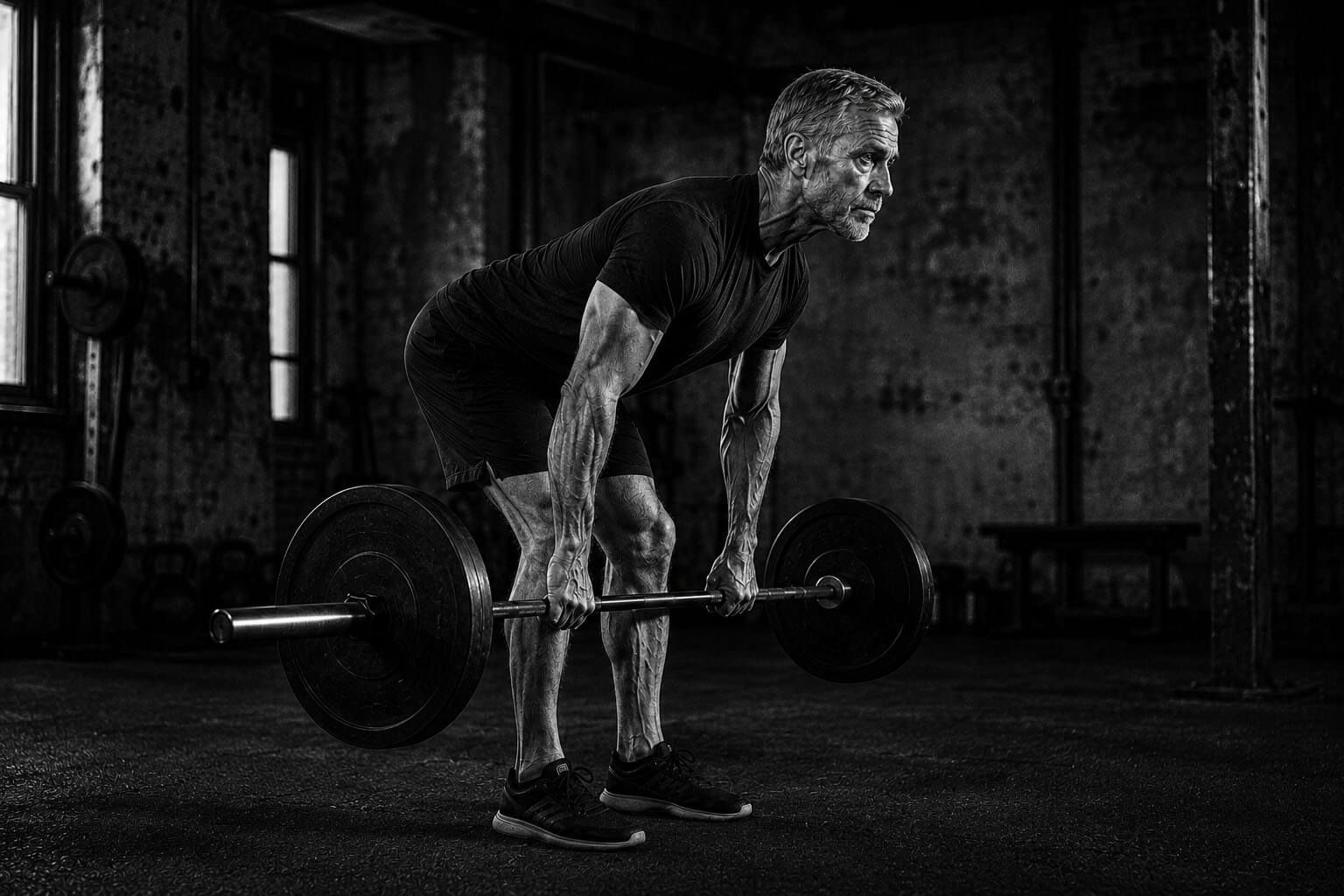
Three sessions. Forty minutes. A squat, a hinge, a push, a pull, and a carry. Progressive overload, which means the challenge goes up a little over time. In a deficit, just holding your numbers is a win.
Strength first. Cardio as the supplement, not the foundation.
You don't need to lift heavy to build muscle after 50. You do need to work hard.
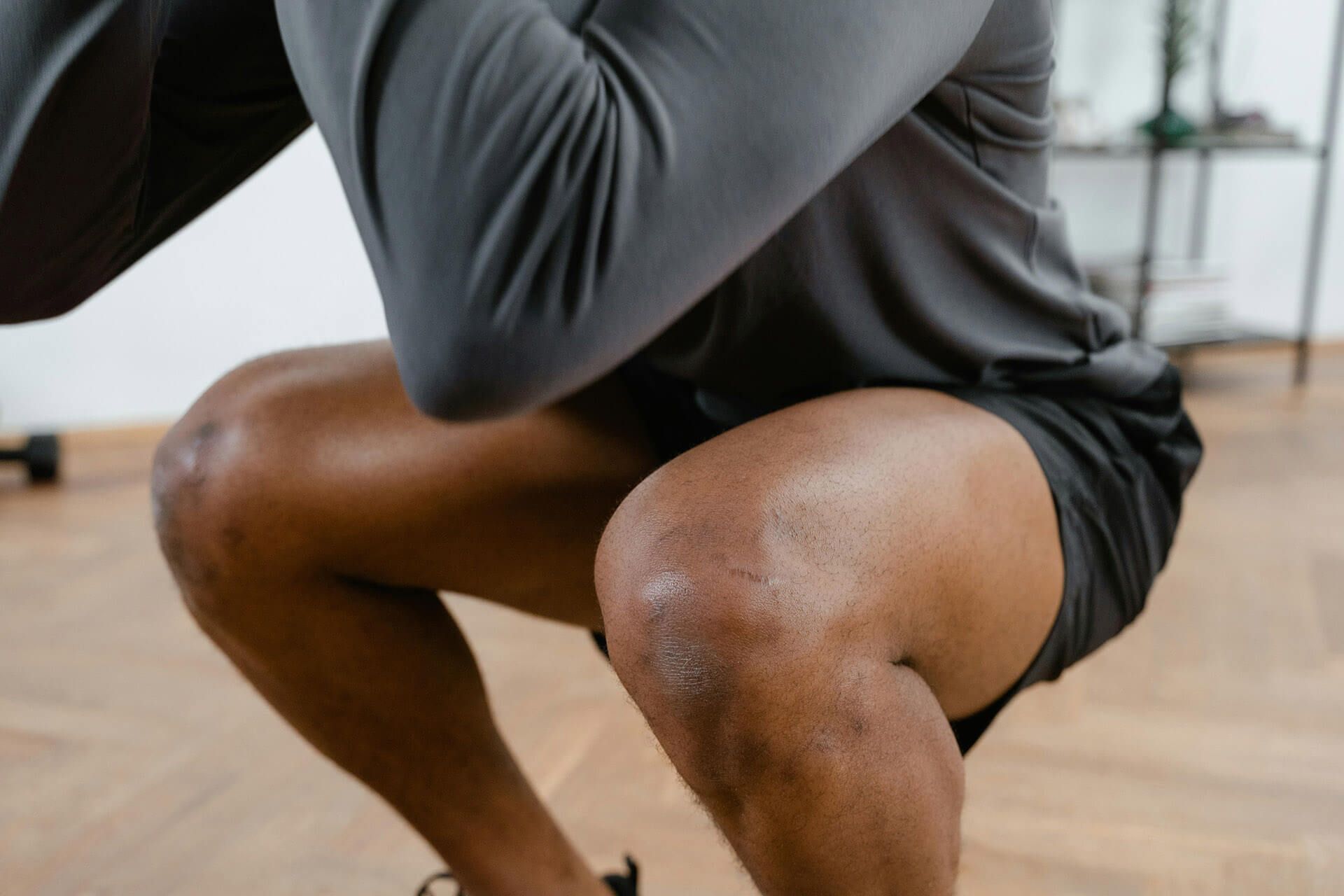
Bad knees? Cranky back? A surgery in your past? Every one of these movements has a version that works around it. Use the version that stays under 3 out of 10 on pain, during the set and the next morning. If you have a medical condition, check with your doctor before you start.
2. Eat protein at every meal.
Aim for 30 to 40 grams at each meal. Eggs or Greek yogurt in the morning. Chicken, fish, or beef at lunch and dinner. Cottage cheese or canned tuna when you need a quick one. Real food first, a protein shake to fill the gap.
Protein is also the most filling thing on your plate. Hit it at every meal and the late-night hunger gets a lot quieter.
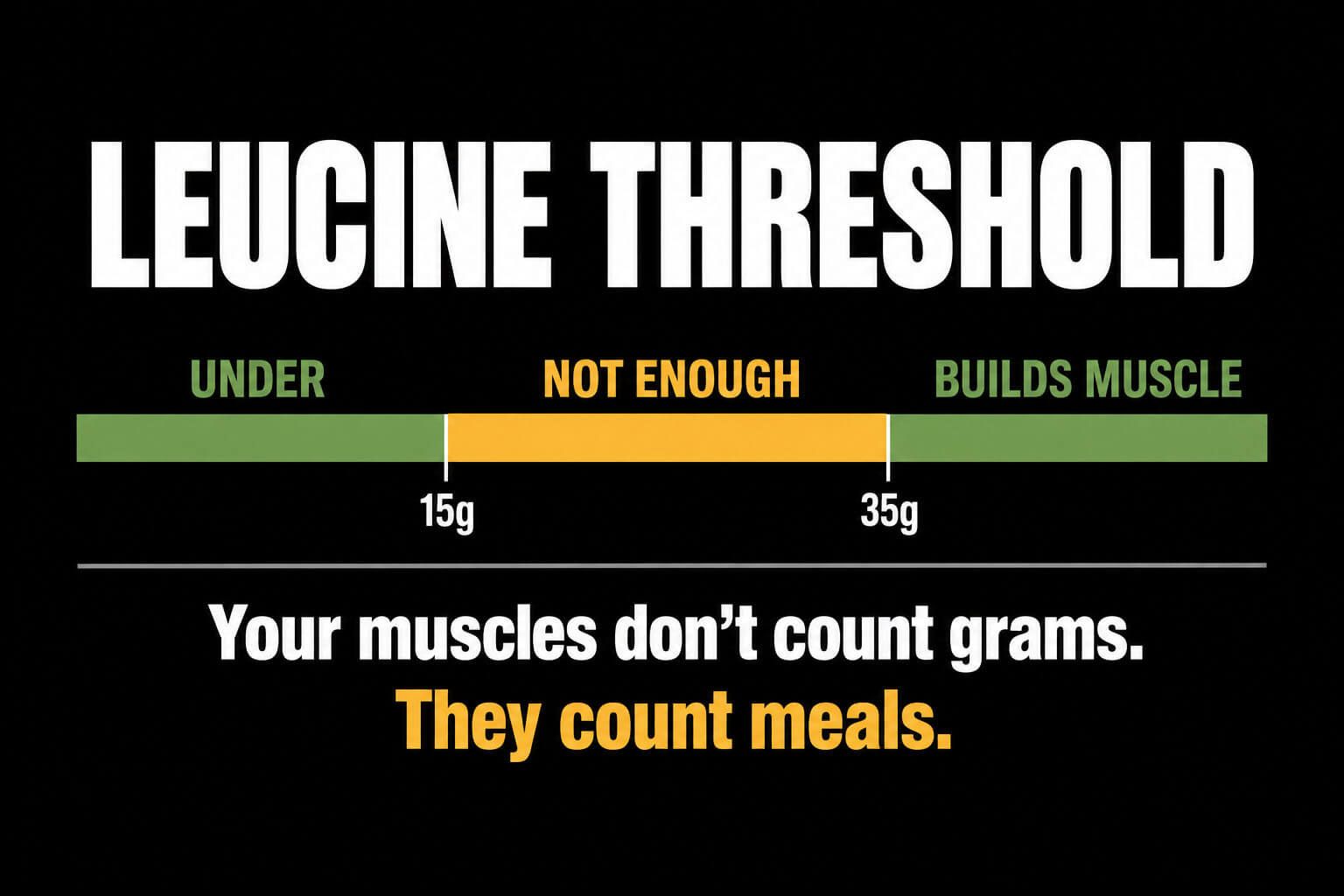
Most men I talk to are eating about half the protein they need. And the per-meal number matters as much as the daily total. I wrote about why here: you hit your protein target and still aren't gaining muscle.
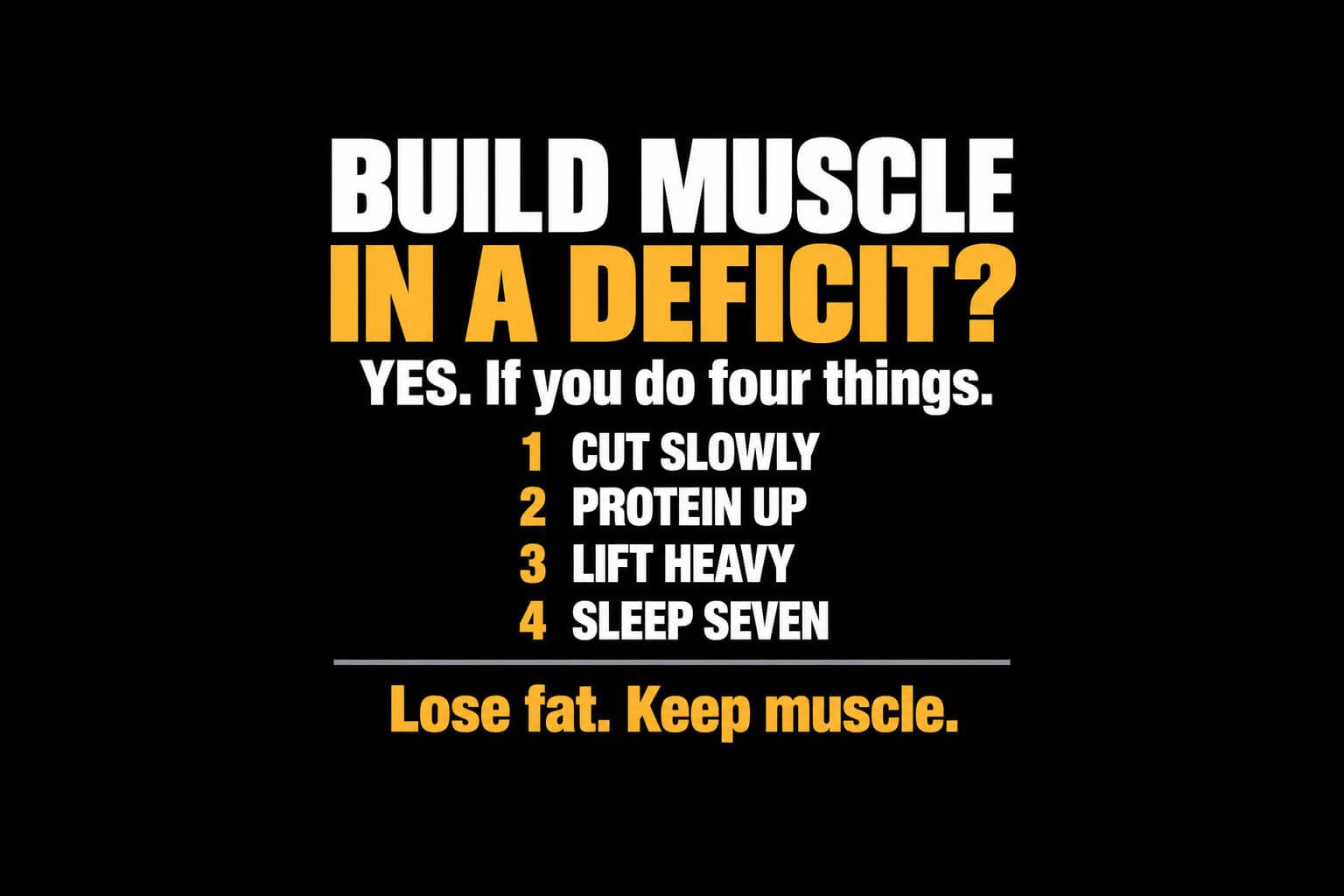
3. Run a small deficit. Not a crash diet.
This is where most men blow it.
They cut to 1,200 calories, feel terrible, and quit by week three. Been there. Done that.
A crash diet strips muscle. Aim for about 300 calories under what you burn. That's roughly half a pound a week.
Slow? Yes. On purpose.
The full breakdown is in can you build muscle in a calorie deficit after 50.
What's holding your middle back?
Take the free FiftyPlus Strength Score. It shows where you stand on strength, nutrition, sleep, and consistency, and which one is costing you the most.
Get your free strength Score4. Walk every day.
Walking burns fat without wrecking your recovery or your knees. Walk daily. If your waist stalls for two weeks, add 1,000 to 2,000 steps a day before you cut more food.
5. Fix your sleep and the nightly drinks.
Short sleep makes you hungrier the next day. Alcohol adds calories and lowers your guard at 9 p.m.
Two beers a night is roughly 2,000 calories a week. That can erase a whole week's deficit.
A system, not willpower
Motivation will not save you.
You'll have days you don't want to train. Stressed, tired, and the last thing you feel like doing is working out.
What saves you on those days is a system. Same training days. Same times. Habits built so deep that skipping feels harder than showing up.
Same goes for your kitchen. I used to end up elbow-deep in a bag of Doritos. The fix wasn't more willpower. It was not buying the damn things. Put Greek yogurt in the fridge instead.
When the easy choice becomes the better choice, willpower becomes irrelevant.
Measure your waist. Not just the scale.
The scale is the worst tool for this.
When you lift and lose fat at the same time, your weight can barely move for a month. The scale says nothing is happening. Your belt says otherwise.
So track four things:
- Your weekly average weight, not one morning's number
- Your waist, once a week, same morning, tape at the belly button, relaxed
- A photo every two to three weeks
- Your training log, every session
A single number is noise. The pattern over time is the information.
At 62, here's what I see
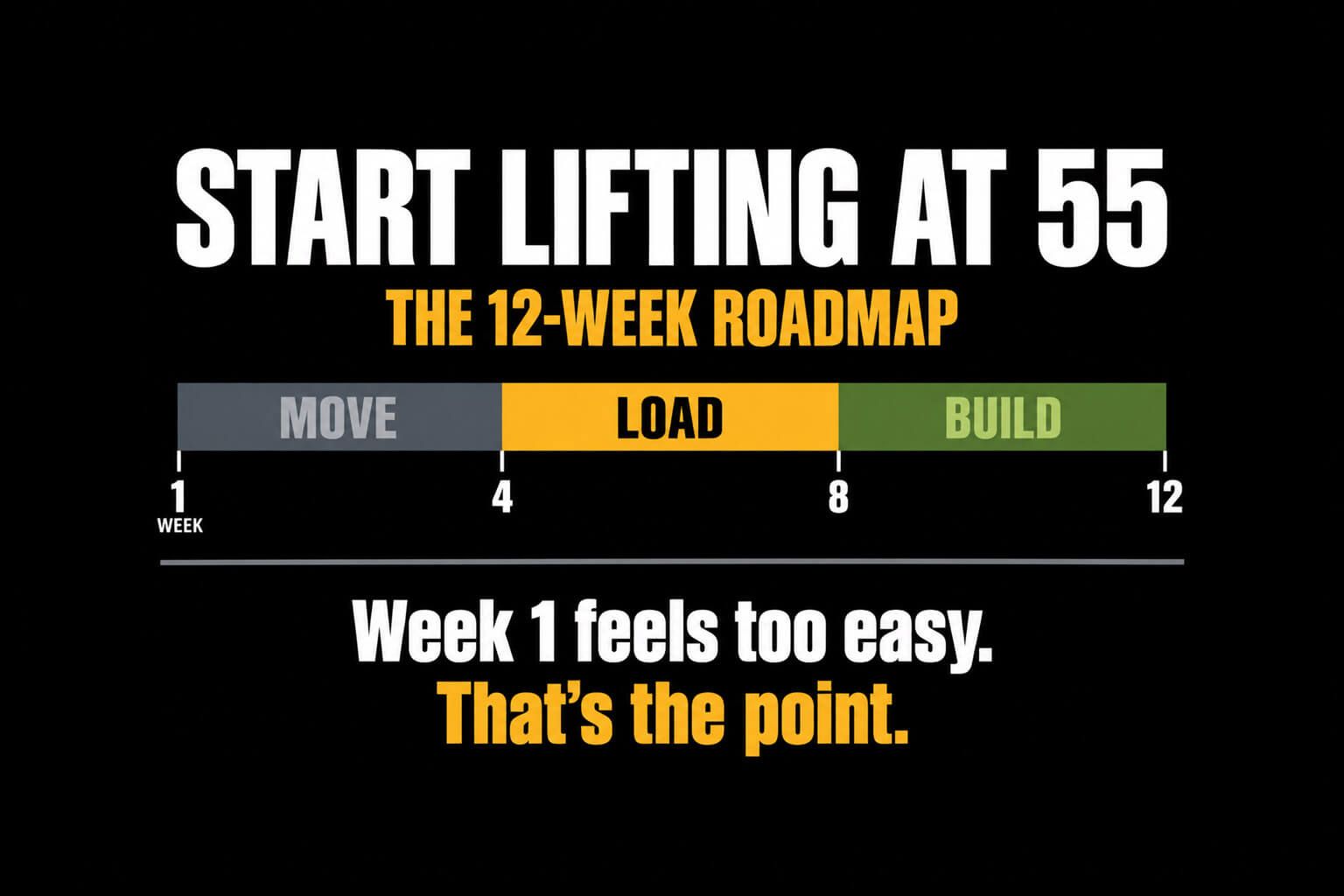
At 55, I finally stopped guessing.
I stopped relying on cardio. I built a strength foundation. I anchored every meal around protein. I took recovery seriously. The weight came off and stayed off. The back pain went away.
At 62, I'm stronger and leaner than I was at 32.
And the men I coach? They're not short on discipline. They have that in spades. They're short on the right plan.
Once they lift, eat protein, and stop chasing the scale, the middle follows. Slower than they want. Faster than they expect.
My main goal for you isn't a number on the scale. It's that the habit is built and it runs without you thinking about it.
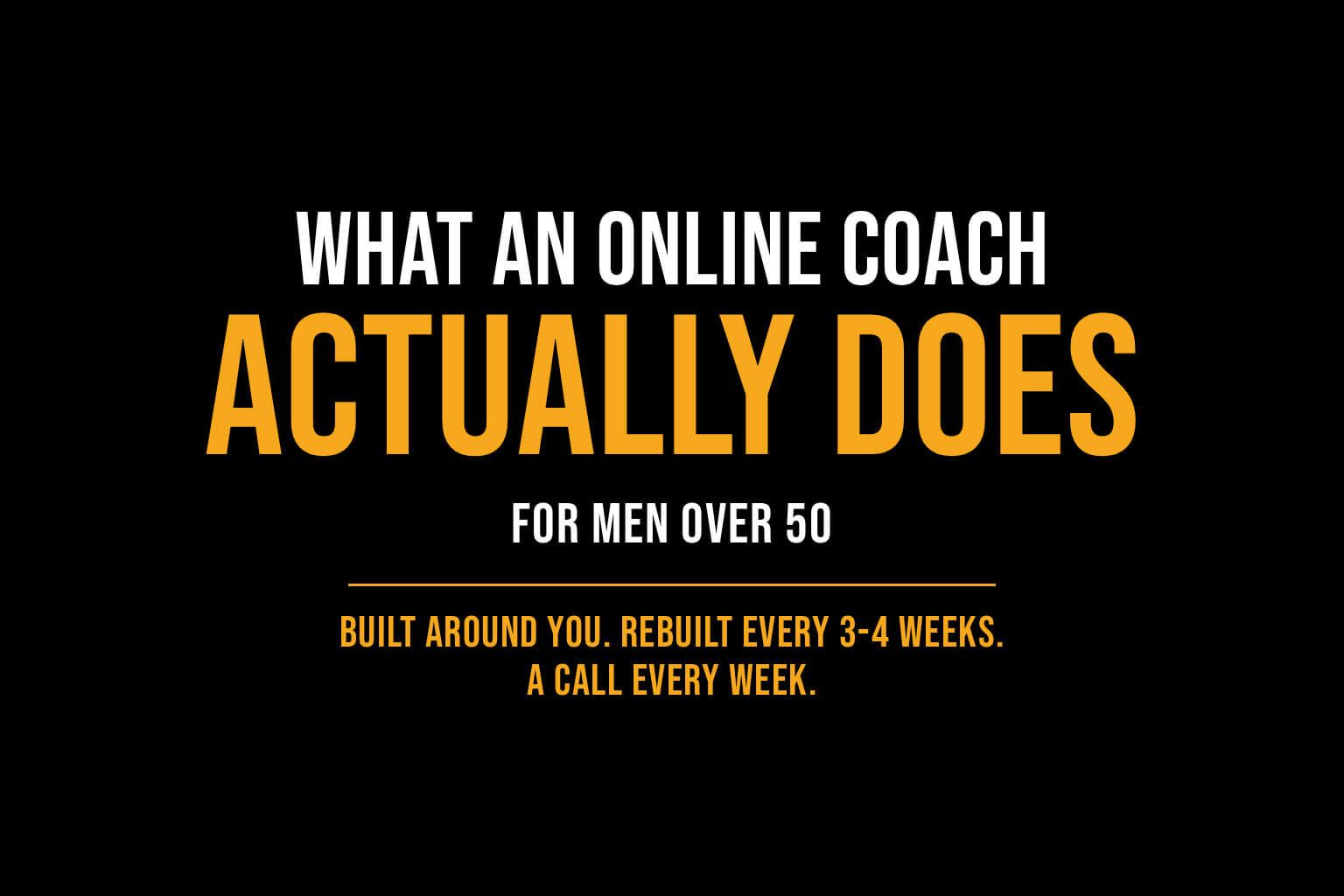
Want help building it? That's exactly what my online strength coaching for men over 50 does. And for the bigger picture, start with building muscle after 50.
Ready to lose the belly and keep the muscle?
Take the free FiftyPlus Strength Score. Two minutes. I'll read your results and show you what to fix first.
Get your free strength ScoreAfter your Score, you can book a free 20-minute call. No pitch. No pressure. Just an honest conversation.