When Back Pain Isn’t Just a Back Problem
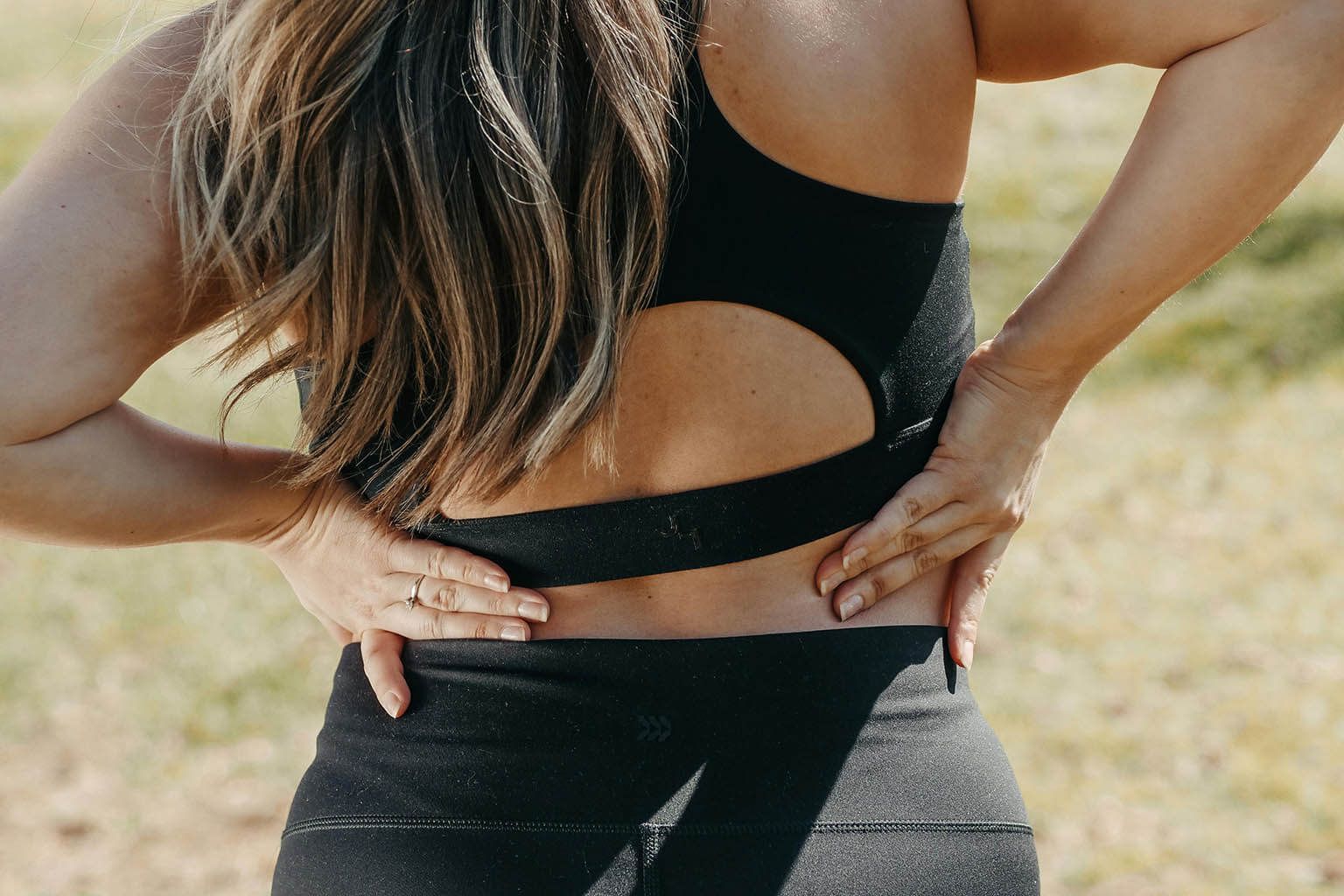
You wake up stiff. Again.
Rolling out of bed feels harder than it should.
Bending over to tie your shoes sends a sharp reminder from your lower back.
So you do what most people do. You stretch a little, grab the heating pad, and pop some ibuprofen.
You get relief… temporarily. Then the pain comes back. It always does.
Most people assume:
“Maybe this is just what happens after 50.”
“Something in my spine must be worn out.”
“I guess this is my new normal.”
But here’s the truth:
Low back pain is often something you can improve, not something you accept as "getting old".
And if you sit a lot, your back pain probably isn’t just about your back.
Once serious medical issues are ruled out, a very common cause looks more like this:
- Stiff hips from years of sitting
- Glute muscles that forgot how to fire
- Core muscles that aren’t supporting your spine
When these three areas stop doing their job, your lower back ends up doing too much. Let’s break that down.
1. Super Tight Hips (The Real Cost of Sitting)
If you sit most of the day, your hips stay in a flexed position for hours at a time.
Do that for 10, 20, 30 years… and things change.
Your hip flexors stay shortened. Your pelvis can tilt forward. And your hips lose the ability to fully extend.
When your hips stop moving well, your lower back starts moving more than it should. And this is a big problem because your spine was built for stability, not to twist, bend, and absorb force all day, every day!
Just understand this...
When your hips don’t move, your back pays the price.
Here's a short video that shows you 3 of my favorite stretches to fix tight hips.
A Simple Self-Check
Grab a broomstick.
Hold it along your spine so it touches:
- The back of your head
- Your mid-back
- Your tailbone
Now push your hips back like you’re closing a car door with your butt.
If you lose contact with the stick or round your spine, your hips are tight, and your back is compensating.
Trust me! I work with many men and women over 50. This is extremely common. And... it’s fixable!
It's called the 3-Point Bar Test.
2. Glute muscles that forgot how to fire
Your glutes are the largest muscles in your body. There is a reason they call the biggest the "glute max!"
But you have a group of glute muscles, and they're a powerful team that drives nearly every major movement involving your lower body. They’re supposed to drive movements like:
- Standing up
- Climbing stairs
- Picking up groceries
- Getting out of a chair
But after decades of sitting? YIKES! They often forget how to fire properly.
When your glutes don’t do their job, force travels upward... into, you guessed it, your lower back.
Now your spine is trying to generate power instead of just stabilizing.
That’s when you feel that dull ache, maybe tightness after standing, or the dreaded flare-up after lifting something simple.
In most adults I train, the issue isn’t that they’re “weak.”
It IS that they’ve never been taught how to properly use and strengthen these muscles.
Once we retrain that pattern, things change.
3. Core muscles that aren’t supporting your spine
Your core isn’t just “abs.” It’s a 360-degree support system, front, sides, and back, that also helps support your spine.
It's kinda, sorta like an internal support brace whose job is to:
- Keep your spine stable
- Control movement
- Protect your joints when you bend or lift
When your core isn’t strong or coordinated enough, your lower back muscles tighten up to compensate.
That’s when you feel chronic stiffness.
Not because you’re broken. But because your body is trying to protect you.
Strength and coordination fix that. Not endless stretching. Trust me! I've had lower back pain, and I train people who have it too.
How to Start Fixing It (Without Overcomplicating Things)
Unless you have a serious condition, you most likely don’t need 45 minutes of rehab. You don’t need to stop training forever.
You need three things:
1. Restore Hip Mobility
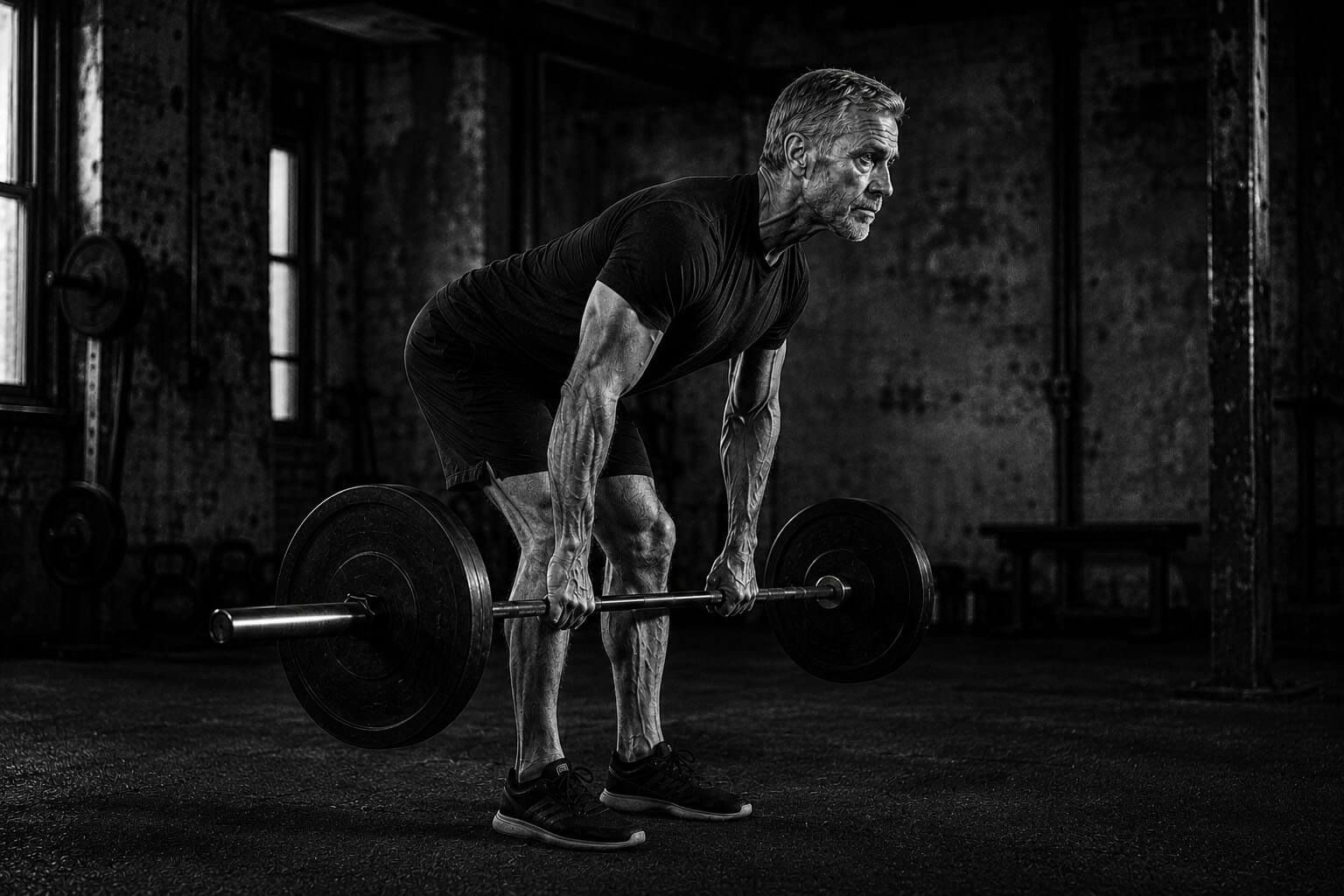
- Practice the hip hinge daily (10 slow reps).
- Stretch your hip flexors.
- Walk more.
2. Strengthen Your Glutes
- Glute bridges.
- Romanian deadlifts (light weight, perfect form).
- Step-ups.
Twice per week is enough to start.
3. Train Your Core for Stability
- Dead bugs.
- Side planks.
- Farmer carries.
- Anti-rotation variations (with a band).
Focus on control... not exhaustion.
Do this consistently for 4–6 weeks, and most people notice:
- Less morning stiffness
- Less fear when bending
- Fewer flare-ups
- More confidence moving
My Back Pain Story
I spent years sitting at a desk as a marketing consultant.
My lower back constantly felt tight. Over time, it got worse. Way worse... to the point that the pain started interfering with my life.
Some days, even walking felt uncomfortable. A heating pad and Thermacare wraps became regular companions.
I remember thinking, “Maybe this is just part of getting older.” I even wondered if something in my spine was permanently damaged.
Stretching helped. Heat helped. Massage helped.
I even saw a chiropractor, and that helped too.
...but only temporarily.
What finally changed things wasn’t another quick fix.
It was learning how to move properly, combined with building strength slowly and intentionally.
Once resistance training became my foundation, mixed with mobility work and daily movement, the pain stopped running my life.
Not because I rested. Because I retrained my body!
This Isn’t About Looking Good at the Beach (But That Can Happen Too)
Some of my clients want to look leaner. Some want to reshape their body.
And yes, we can absolutely do that!
But first?
- We focus on moving correctly.
- We build strength safely.
- We restore what years of sitting took away.
Because this is about something bigger...
Functional independence.
This means being able to:
- Pick up luggage without hesitation.
- Play 18 holes without paying for it the next day.
- Travel without your back locking up.
- Lifting your grandkids confidently.
Muscle is your longevity insurance.
The hip hinge is one of the most important movement patterns protecting your spine.
But movement alone isn’t enough.
You also need glutes strong enough to drive the motion, and a core stable enough to control it.
- If you can’t hinge, you can’t lift safely.
- If your glutes aren’t strong, your back picks up the slack.
- If your core can’t stabilize, force leaks where it shouldn’t.
And if you can’t lift safely and consistently, you can’t build muscle where it matters most.
Without muscle, independence slowly fades.
That’s the real issue.
The Bottom Line
Your back pain may not be... “just your back.”
If you’ve ruled out serious medical issues and still struggle with bending, lifting, or prolonged standing, tight hips, underactive glutes, and a weak core are very common contributors.
It’s easy to assume your body is breaking down. That it’s just age. That something is permanently damaged.
But very often, it’s a movement issue, not a life sentence.
Medication can dull pain. But it can’t restore movement.
Retraining how you move and strengthening the right muscles can change everything.
Start simple. Practice the hip hinge, strengthen your glutes, train your core, and move daily.
And if pain is severe, worsening, or persistent, see a physical therapist or physician first to rule out underlying conditions.
Ready to Look Deeper?
If you’ve been battling back pain for months or years and the usual fixes haven’t worked, it may be time to assess how you’re moving.
Book a free strategy call. No pressure. No sales pitch.
We’ll look at your movement patterns, your history, and determine whether hip mobility, glute strength, and core stability are part of the issue, and map out clear next steps.
Because back pain isn’t something you simply live with.
In many cases, it’s something you retrain.
And that starts with how you move.
How Strong Are You Really for Your Age?
Take the 3-minute Strength Scorecard and discover where you stand, and what to improve to stay strong, lean, and independent for years to come.
👉 Get Your Free Strength Score
Important:
I’m a strength coach, not a medical doctor. This article is for educational purposes only. If your pain is severe, worsening, or accompanied by numbness, weakness, or other unusual symptoms, please consult a physician or physical therapist before starting any exercise program.