The One Lift That Keeps You Strong, Upright, and Independent After 50
Craig McBreen • January 13, 2026

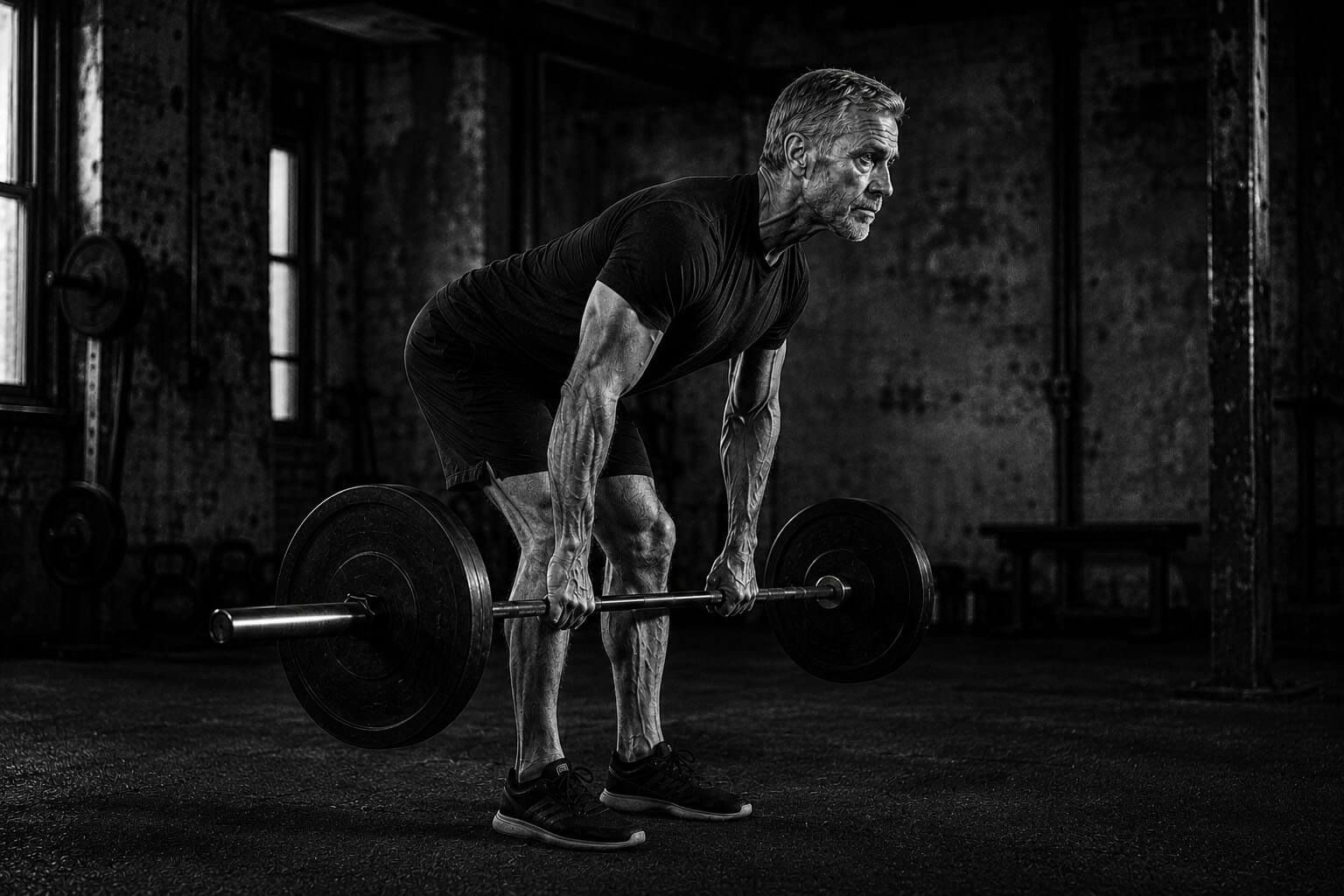
You’ve probably heard of the deadlift. You might even be afraid of it. 


In gyms, it’s treated like a young man’s lift to show off with heavy iron. 


And you might be thinking, “I’m 68 and have no place performing deadlifts.”


The deadlift is not about Ego. It’s one of the most effective ways to combat sarcopenia, the muscle loss that steals your strength year by year.


The "Pick Up Anything" Exercise


Think about the last time you bent down to pick something up. Maybe it was a bag of groceries. A box of files. Your grandkid reaching up for a hug.


Did you feel it in your lower back? Did it hurt?


Here's the thing: you're already doing deadlifts every single day. The question isn't whether you should deadlift, it's whether you're doing it right.


Most people bend at the waist and use their lower back like a crane to hoist things up. 


It works... until one day it doesn't. I see this all the time with my clients: A strain becomes an ache. An ache becomes chronic pain. And suddenly, simple tasks feel risky.


The deadlift teaches your body a better way, using your hips and legs as the engine, so your back can finally stop doing a job it was never meant to do alone.


Building Your "Muscle Armor"


Lifting heavy things tells your body something important: You still matter. Stay strong.


Without that signal, your body assumes you're done. It starts the retirement process, meaning sarcopenia, the medical term for your muscles quietly quitting on you.


Deadlifts build armor. 


The kind that wraps around your joints and spine, protecting them from wear and tear.


Here's why the deadlift matters: it's a compound lift, meaning it works multiple muscle groups at once. Your legs, hips, back, and core are all firing together. 


That full-body demand does two things other exercises can't match:


First, it builds bone density.
 Your skeleton responds to heavy loads by getting denser, tougher, and less likely to snap when you slip on ice or miss a step.


Second, it reverses decades of sitting.
 You know that forward hunch from years behind a desk? Or just sitting… a lot? Deadlifts pull you back upright by strengthening everything that holds you tall.


Dr. Gabrielle Lyon puts it perfectly: muscle isn't just for looking good. It's "the organ of longevity." It's the metabolic engine that determines whether you thrive or fade in your 60s, 70s, and beyond.


Two Ways to Pull: Conventional vs. RDL


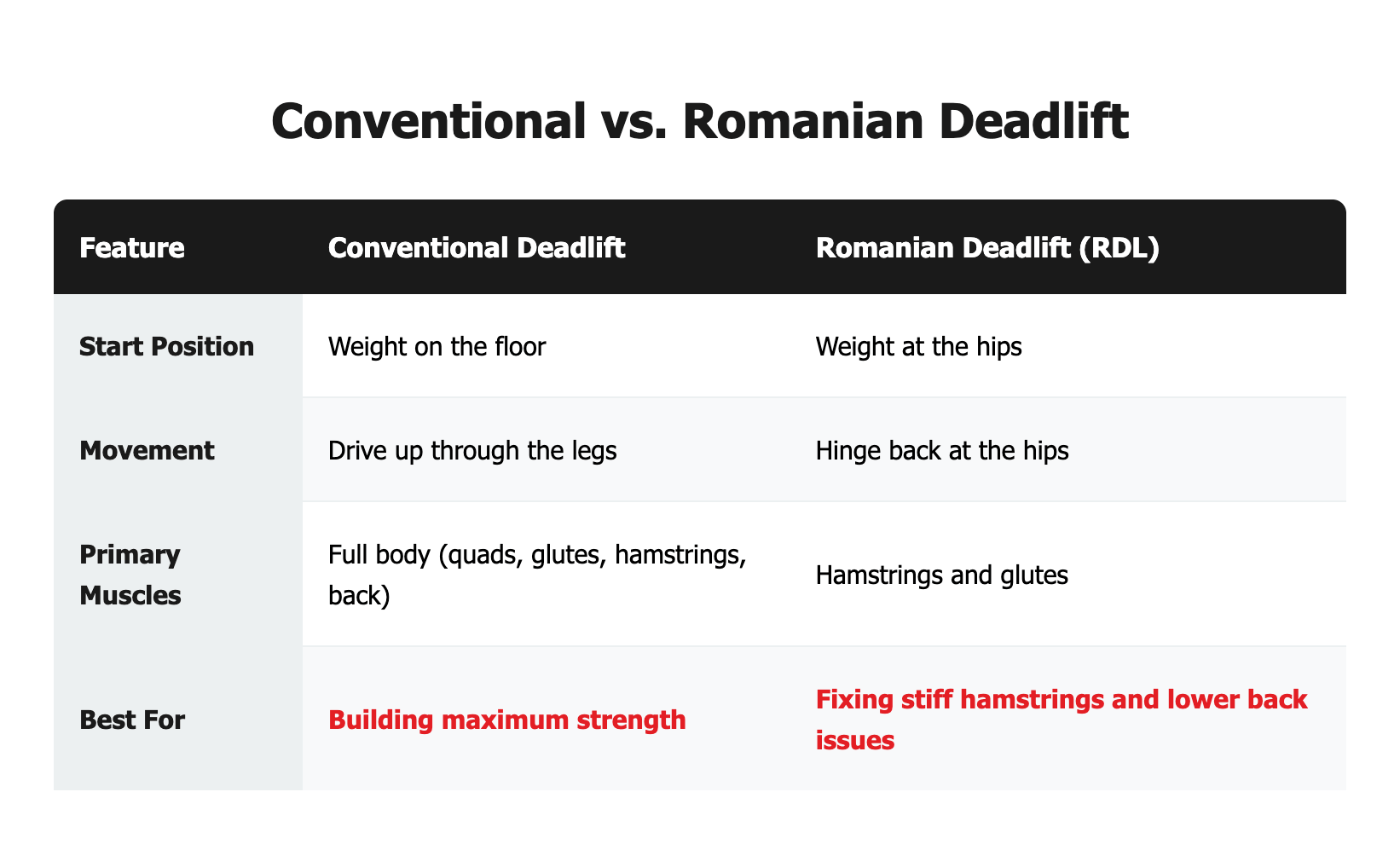
There are two ways to deadlift, and the one you choose depends on what you need to fix.


Conventional Deadlift: 


This starts with the weight on the floor. You bend your knees, grip the bar (or kettlebell), and drive through your legs to stand up. It's a full-body power move that builds raw strength from the ground up.


Romanian Deadlift (RDL): 


This starts from standing. You hold the weight at your hips, push your butt back like you're closing a car door with it, and lower the weight while keeping your legs mostly straight. It's all about the hinge: teaching your hamstrings and glutes to do the heavy lifting instead of your lower back.


If you're new to this, start with the RDL. It's more forgiving, easier to learn, and directly addresses the tight hamstrings and weak glutes that plague most people over 50.
Stability and Balance: The Single-Leg Factor


Here's something most people don't think about: lifting heavy with both feet planted is great for strength, but it doesn't teach your body how to stay upright when life gets unstable.

Single-leg work does.


Your ability to balance on one leg is a direct predictor of whether you'll catch yourself when you trip or end up on the ground. 

It's the difference between confidently navigating uneven terrain and shuffling carefully everywhere you go.


Two variations to try:


  • Single-Leg RDL: Stand on one leg, hinge forward like a controlled bow, feel the stretch in your hamstring, then pull yourself back up. This builds hip stability and bulletproofs your balance.

  • Single-Leg Deadlift: Pick up a weight from the ground using only one leg for power - like grabbing a suitcase off the curb. This is real-world strength.

How to Start Safely


If you're new to this, start with a kettlebell or a single dumbbell held vertically in both hands.


Do:

  • Keep your hips higher than your knees
  • Keep your shoulders higher than your hips
  • Push through your heels, not your toes


Don't:

  • Round your back (keep your spine neutral)
  • Squat the weight (this isn't a squat)
  • Hyperextend at the top (just stand up tall, don't lean back)


Master the Technique:


Is This "Cardio"?


Not technically. But try doing five heavy deadlifts and tell me your heart isn't pounding.

This is what we call Metabolic Resistance Training. You're building muscle and conditioning your cardiovascular system at the same time. Traditional cardio burns calories - and often muscle along with it. Deadlifts build the engine that keeps you metabolically healthy for decades.


Start Today!


You're going to pick things up for the rest of your life. The question is whether you'll do it safely, or whether you'll throw out your back reaching for a bag of dog food when you're 72.


The deadlift isn't just an exercise. It's a skill that protects you, strengthens you, and keeps you independent. It's one of the few things you can do in a gym that directly translates to real life - and real longevity.


Most people wait until something breaks to take their strength seriously. Don't be most people.


Start light. Master the movement. Build your armor.


Your future self will thank you.

By Craig McBreen July 30, 2025
Get Fit After 50: Discover These Free eBooks to Build Strength, Boost Metabolism, and Stay Active. And...
A man is lifting a barbell over his head in a gym.
By Craig McBreen June 17, 2025
You can create a simple plan to get in shape without confusion or feeling overwhelmed. Here’s a simple, sustainable way to start exercising and...
By Craig McBreen June 13, 2025
I’m 61, a NASM-certified personal trainer, and lifting weights has completely changed my life! I move better, look better, feel better, and get a lot more done. Midlife isn’t the end. Nope! It’s your launchpad to build strength, lose weight, and feel better. But myths about fitness after 50, like “you’re too old” or “you’ll get hurt,” drain your drive and keep you trapped in a rut, missing out on the life-changing power of exercise. These lies whisper doubt, making you think strength and vitality are out of reach. BUT they’re not! Getting fit can transform your energy, confidence, and independence, and I’m here to help you break free and start moving. I love debunking these lies and defying aging stereotypes. It’s why I do what I do! My ethos? Stronger. At. Any. Age. Strength has no expiration date, and I’m here to help you rewrite the rules of aging. So, let’s crush five big fat myths with facts, simple steps, and actionable tips to get you moving today. Why Myths About Fitness After 50 Hold You Back Myths about aging and exercise aren’t just wrong. They’re soul-crushing. Honestly… they are! They plant doubts like “I’m too old” or “I’ll hurt myself,” making fitness feel risky or pointless. This fear leads to inaction, and that’s when atrophy kicks in. Atrophy sucks, big time. It leaves you with low energy, weaker muscles, achy joints, and a higher risk of chronic conditions. The soreness of a workout? Temporary. The pain of muscle loss? It lingers and drags you down. The truth? Fitness after 50 is transformative, boosting strength, mobility, and mental clarity. Today, let’s ditch the myths and build a fitness habit to change your life. Myth 1: You’re Too Old to Start Exercising Truth: You’re never too old to get fit and strong. Research highlighted in Men’s Health shows that older adults, even those with mobility issues, can improve strength and reduce disability risk by about 20% through regular resistance training. While muscle growth may be slower after 50, your body still responds to exercise, building strength and boosting mobility to keep you thriving. Action Step : Just start! Try bodyweight exercises like chair squats (10 reps, 2 sets) or wall push-ups. Progress to light dumbbells (3-5 lbs) for bicep curls. Aim for 2-3 sessions per week, 20 minutes each. Need a warm-up? Check out my free eBook, Your Dynamic 50+ Warm-up Guide , with 15 active stretches to prep your body for strength training. Myth 2: You’ll Get Injured if You Exercise Truth: Exercise is safer than sitting still, and older adults recover better than you think. A study in the Journal of Aging and Physical Activity, cited in Parade , found that "older adults didn’t lose more muscle function than younger adults.  In fact, after 48 hours, their muscle soreness was about two-thirds lower, and after 72 hours, it dropped to just one-third of what their younger counterparts experienced." And, “These findings are significant because they challenge the widespread belief that aging muscles recover more slowly or are more prone to exercise-induced damage." Atrophy aches worse than any workout—trust me, I train people over 50, and the mild discomfort of lifting beats the lingering pain of muscle loss every time! Action Step : Over 50? 60? Just start! Try push-ups, bodyweight squats, or a cheap set of dumbbells. Train 2-3 times a week, 15-20 minutes. On off days, walk to boost your step count, bike, hike, or even run. Keep it simple to build the fitness habit. Not sure where to begin? Read my guide on getting fit after 50: Fit, Strong, and Lean After 50 . Myth 3: It’s Too Late to Build Muscle Truth: You can pack on muscle even in your 70s and beyond. A 2023 study in Frontiers in Physiology, featured in Men’s Health , found that untrained men in their 70s and 80s built muscle just as effectively as lifelong athletes after a single resistance workout, proving it’s never too late to get stronger. The site mentioned 78-year-old Ernie Hudson, who looked amazing for his age. Age may slow testosterone, but smart training—like heavy compound lifts—sparks growth and keeps you thriving. Action Step : Grab some resistance bands or dumbbells for seated rows (8-10 reps, 2 sets). Eat 0.5-0.7g of protein per pound of body weight daily (e.g., 75g for a 150-lb person) to fuel muscle repair. Want to start with dumbbells? My free eBook, Dumbbell Fitness Made Simple , offers easy, effective exercises to kickstart your routine. Download it now—no email needed. Myth 4: You Need Intense Workouts to See Results Truth : Moderate, consistent exercise is the key. The CDC recommends 150 minutes of moderate activity weekly for older adults, like brisk walking or light weightlifting. People get excited, jump in, burn out, and fizzle. NOT good! Good habits eat motivation for breakfast. Start small, build a routine that fits your life, and after 30+ days, it becomes part of your day. Action Step : Walk 20 minutes daily at a good pace. Add one full-body dumbbell workout weekly (e.g., squats, chest presses, rows; 10 reps each, 2 sets). Try push-ups, bodyweight squats, or light dumbbells 2-3 times a week. Off days? Walk, bike, or hike. Need inspiration? Read, Fit, Strong, and Lean After 50 . My little ebook shares five steps to revive your metabolism and build muscle. Myth 5: Fitness Won’t Improve Your Quality of Life Truth: Regular exercise transforms how you feel and live, especially as you age. This study found that men over 65 who exercised at least 45 minutes three times a week scored significantly higher in life satisfaction, self-esteem, and self-efficacy compared to those who didn’t exercise. Getting fit isn’t just about lifting weights. It IS about climbing stairs with confidence, carrying groceries like a pro, and feeling unstoppable at any age. Action Step : Kick off your day with a quick 10-minute routine: 5 minutes of stretching (think arm circles or leg swings) and 5 minutes of bodyweight moves like sit-to-stands. Track how your energy and mood improve each week. My Journey and Expertise At 61, I’m proof that fitness after 50 changes everything. As a NASM-certified trainer, I turned my health around after battling low energy and joint pain in my 50s. I shifted from a cardio-heavy routine in my 40s to strength training and smart nutrition in my 50s. The secret? Small, daily actions pave the way for lasting results that will improve your life! Take Control of Your Fitness Today. Forget what they told you—midlife is your time to shine. YEP, you CAN build strength, lose weight, and feel AMAZING. So, get after it! The key to getting fit? Build the fitness habit. Start small with workouts you enjoy, stay consistent, and watch your life change. Let’s rewrite the rules of aging together. Resources: Check out my eBooks, guides , and tools to help you get fit, strong, and lean after 50.
A man is lifting a barbell in a gym.
By Craig McBreen June 3, 2025
Aging doesn’t mean slowing down. No, far from it! With the right approach, you can rebuild your body, boost your metabolism, and live stronger.
A row of dumbbells are lined up on a rack in a gym.
By Craig McBreen March 9, 2025
Everyone, regardless of age, should incorporate some form of muscle-strengthening activities into their routine...
A man is lifting a barbell in a gym in a black and white photo.
By Craig McBreen February 27, 2025
Why should men over 50 in Fort Collins (or anywhere) make strength training a priority? Let’s break it down in this post and...
Two people are riding bicycles down a trail in the woods.
By Craig McBreen November 22, 2024
Did you know Fort Collins ranks among the fittest cities in America? With miles of scenic trails, bike-friendly roads, and an active...
A man is lifting a barbell over his head in a gym.
By Craig McBreen October 4, 2024
Strength training is a powerful tool to help you build a healthier, more active lifestyle. It’s never too late to start, and the benefits far...
An aerial view of the city of Fort Collins with mountains in the background.
By Craig McBreen September 24, 2024
Below are some exciting fitness events happening in Fort Collins and surrounding areas that you won't want to miss.
A man and a woman are lifting dumbbells in a gym.
By Craig McBreen September 12, 2024
Resistance training and proper protein intake are two of the most powerful tools to reverse the signs of aging and improve your overall...